
Introduction
Orthodontic appointments can make anyone feel a bit nervous. Whether it is your own consultation or your child’s, not knowing exactly what will happen inside the clinic is often the biggest source of anxiety—especially for children who may have had unpleasant dental experiences in the past, or who simply feel uncomfortable sitting in a dental chair (truth be told, even dentists do not always love sitting in them!).
The good news is that a first orthodontic visit is straightforward, completely painless, and non-invasive. There are no drills, no injections, and rarely any treatment started on day one. It is strictly an assessment visit designed to evaluate your smile and provide you with clear, reliable information. You will leave the consultation understanding your diagnosis, available treatment options, estimated timeline, and exact costs—with zero pressure or immediate commitment required.
Before Your Visit: Referrals & Registration
Do You Need a Referral?
No referral is required. You can book an appointment directly with an orthodontist. While many patients are referred by general dentists, self-referrals are equally common and welcome.
Registration and Medical History
Upon arrival, you will complete a short medical history form taking approximately 10 minutes. This form covers:
- Basic personal and contact details
- Existing medical conditions, current medications, and allergies
- Previous dental or orthodontic treatments, tooth extractions, or jaw surgeries
- Your primary goals and cosmetic or functional concerns
A complete medical background is essential because underlying conditions (such as diabetes or osteoporosis) and certain long-term medications can directly influence bone remodeling and tooth movement planning.
Step-by-Step Breakdown of Your First Visit
Step 1: Comprehensive Clinical Examination (Approx. 15 Minutes)
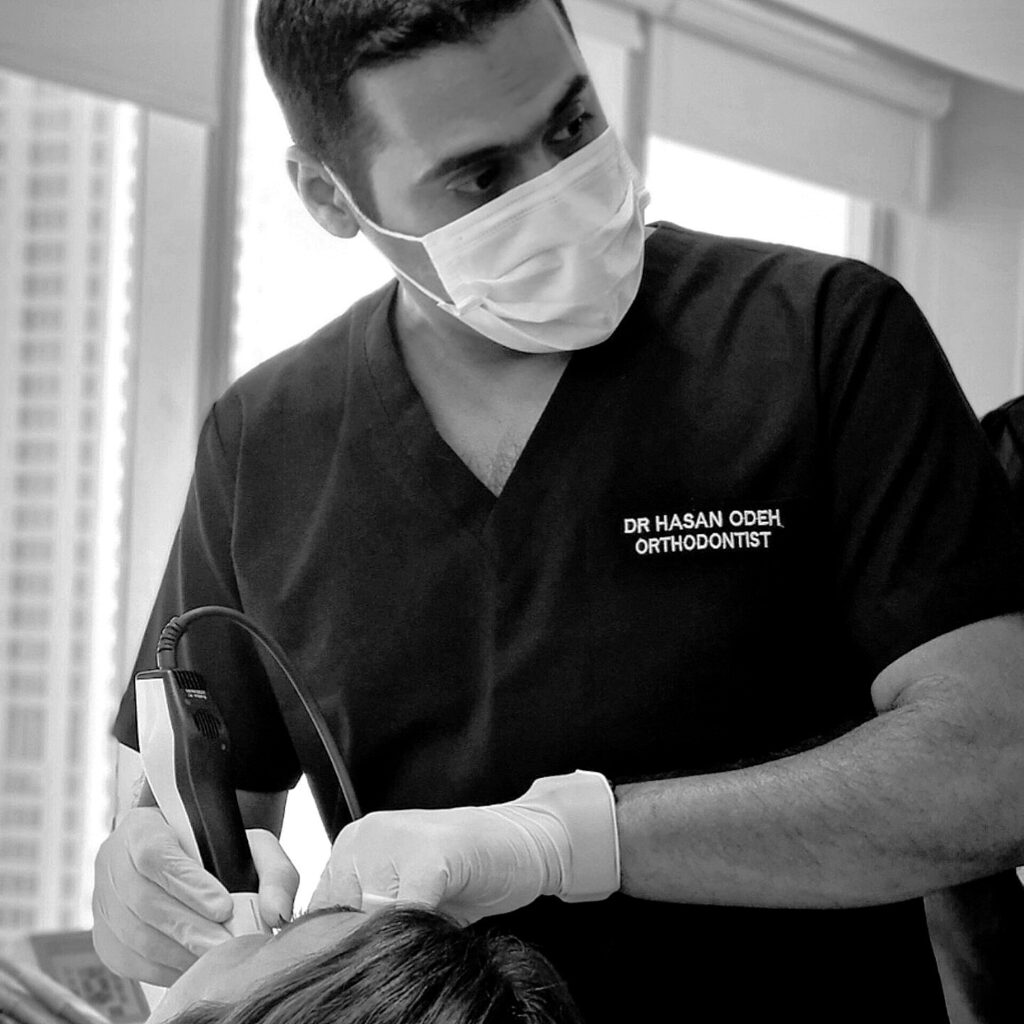
During the examination, Dr. Hasan Odeh evaluates four primary anatomical areas:
- Facial & Jaw Aesthetics: Symmetry, lip posture, and facial profile from front and side views.
- Intraoral Check: Individual tooth alignment, gum health, bite relationship (occlusion), crowding, spacing, and oral hygiene.
- Jaw Joint Function (TMJ): Checking jaw movement range during opening and closing, listening for joint clicking, and assessing muscle comfort.
- Soft Tissues: Inspecting the tongue, cheeks, and palate for any structural or functional irregularities.
Findings are explained step-by-step during the exam so you stay informed throughout the process.
Step 2: Diagnostic Records
If the clinical exam indicates that treatment is beneficial, comprehensive diagnostic records are collected to analyze your bite in detail:
- Panoramic X-ray (OPG): A full-mouth X-ray showing tooth roots, jawbone structure, and any un-erupted or impacted teeth.
- Lateral Cephalometric X-ray (Lat Ceph): A side-profile head X-ray used to analyze bone angles and jaw relationships.
- Facial & Intraoral Photographs: High-resolution photographs from multiple angles to document your baseline smile and facial balance.
- 3D Digital Intraoral Scan: An optical 3D scan of your teeth using a digital wand—eliminating the need for messy traditional impression putty.
- Digital Study Models: 3D digital models generated from the scan to precisely plan tooth movements.
Step 3: Discussion & Custom Treatment Strategy
Once all examination details and diagnostic records are reviewed, you will sit down to discuss:
- Specific alignment, spacing, or bite issues present
- Treatment options best suited to your case (e.g., clear aligners such as Invisalign or Spark, traditional metal braces, ceramic braces, or specialized appliances)
- How appliance selection integrates with your lifestyle, professional needs, and daily routines
- Realistic treatment timelines and expected clinical outcomes
Questions are strongly encouraged at this stage to ensure you fully understand every aspect of your proposed care plan.
Step 4: Cost Breakdown, Insurance, & Payment Plans
Before leaving, you will receive a transparent financial breakdown covering:
- All-inclusive treatment fees with no hidden costs
- Flexible interest-free monthly installment plans
- Direct billing options or guidance for medical insurance reimbursement
What to Bring to Your First Orthodontic Visit
| Item to Bring | Purpose & Details |
|---|---|
| Health Insurance Card | Bring your card even if you are unsure about coverage—clinic staff can verify orthodontic benefits for you. |
| List of Current Medications | Essential for identifying drugs that may impact bone density or tooth movement rates. |
| Previous Dental X-rays | Bring any recent dental X-rays taken within the last 6–12 months to avoid unnecessary repeat imaging. |
| List of Questions & Concerns | Writing down key questions beforehand ensures all your priorities are discussed during the consultation. |
| Parent or Legal Guardian | Mandatory if the patient receiving consultation is under 18 years of age. |
Frequently Asked Questions
Does the first orthodontic visit hurt?
Not at all. The consultation consists entirely of a physical check, visual examination, digital scanning, and X-rays. No braces are fitted and no invasive procedures are performed.
How long does the appointment take?
A standard initial consultation takes 30 to 45 minutes. If full diagnostic 3D scans and X-rays are taken during the same visit, allocate approximately 60 minutes.
Booking & Contact Information
Consultations are available across practice locations in Dubai and Abu Dhabi:
- Dubai Clinic: Al Safa / Palmira Specialised Dental Center
- Phone: 04 225 2000
- Abu Dhabi Clinic:
- Phone: 02 666 7569
- Website: drhasanodeh.com