
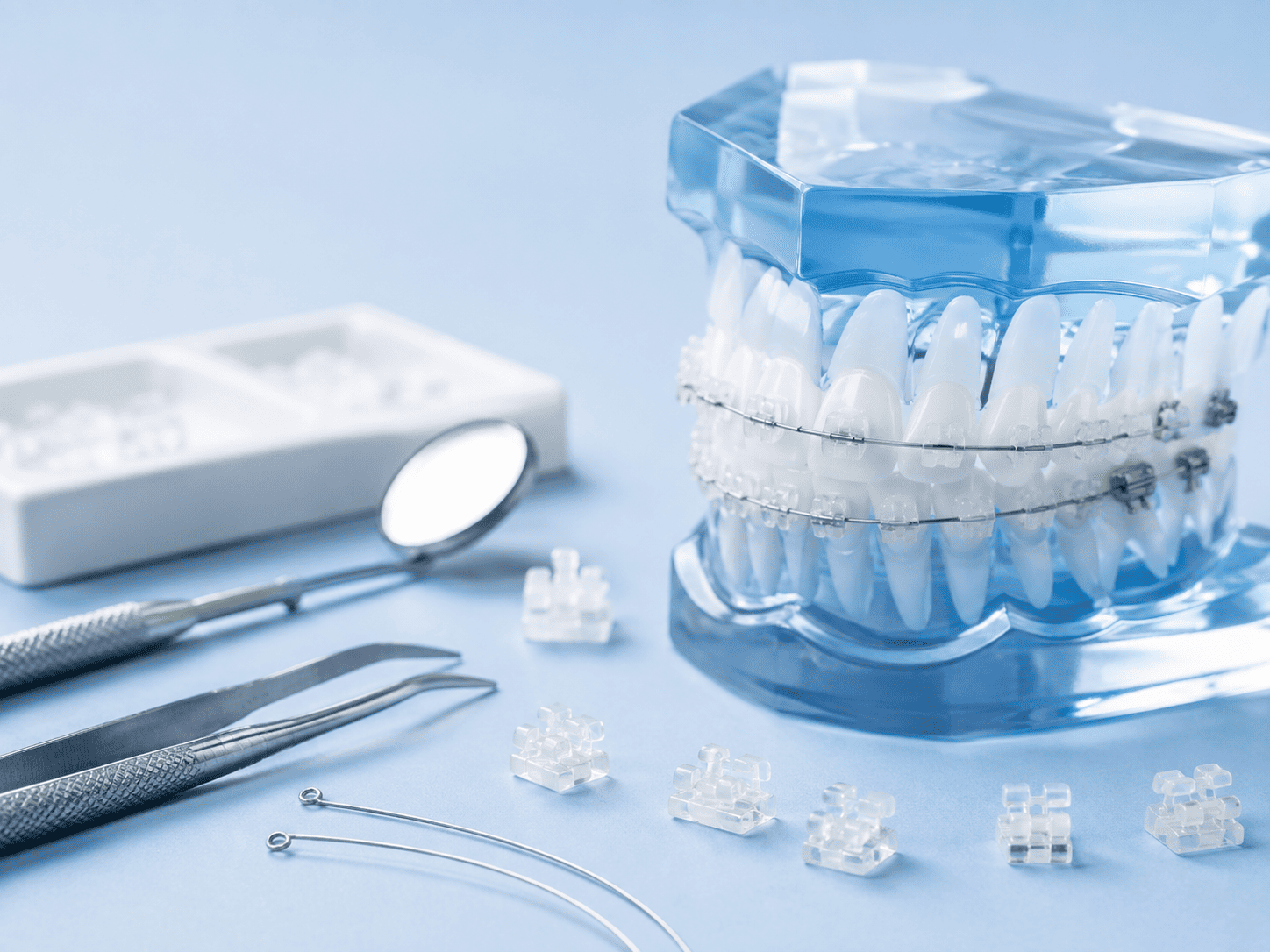
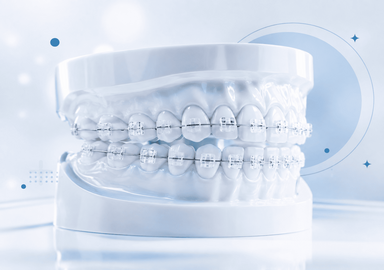
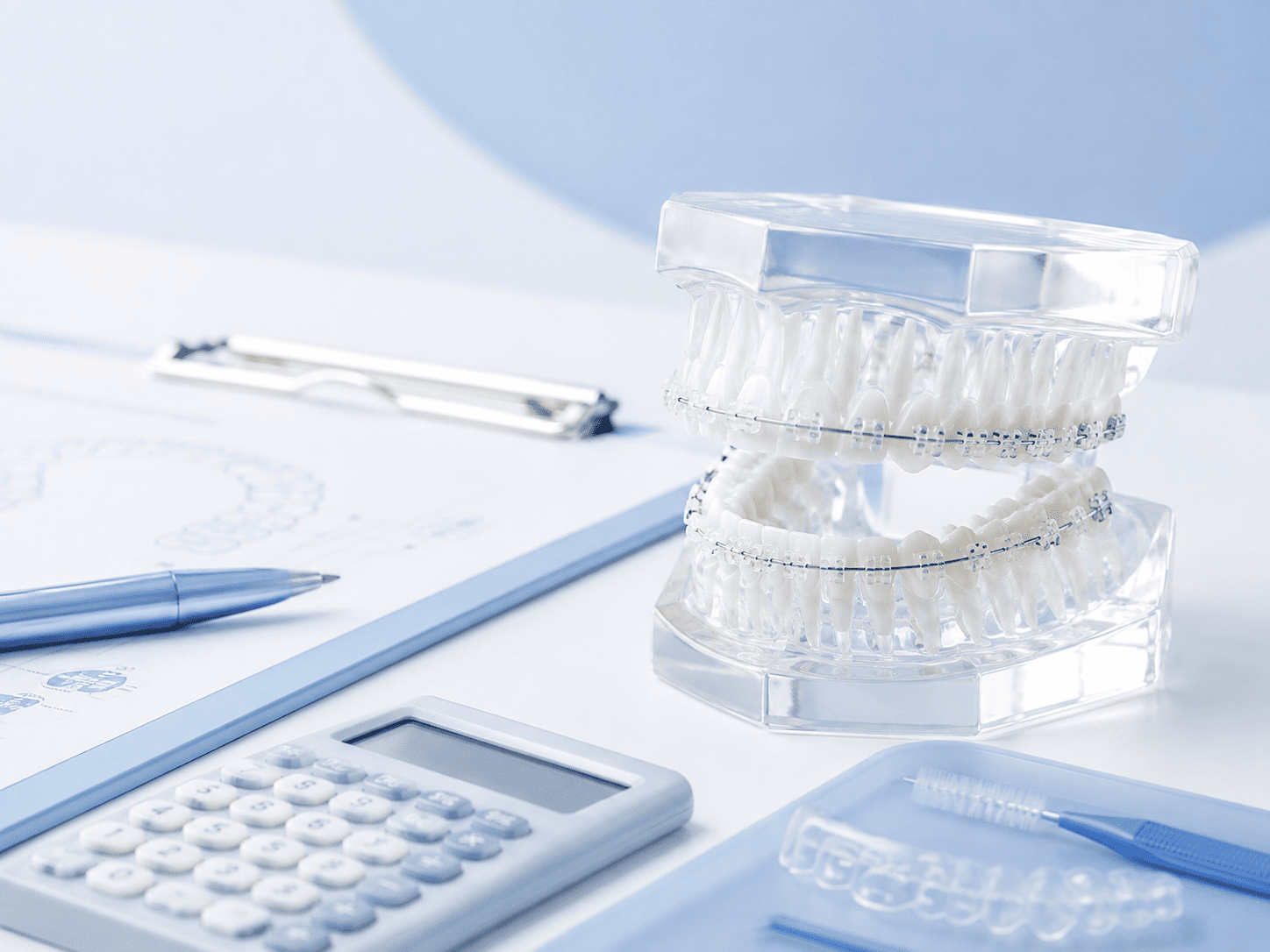
Ceramic braces — also called ceramic dental braces, clear ceramic braces, or ceramic transparent braces — offer the same clinical effectiveness as metal braces with a significantly less visible appearance. The brackets are made from tooth-coloured ceramic or composite material that blends with the natural colour of your teeth, making them a popular choice for teenagers and adults who want effective orthodontic treatment without the aesthetic impact of a full metal smile.
Dr. Hasan Odeh, specialist orthodontist with 20 years of experience and three Master’s degrees in Orthodontics, offers ceramic brace treatment at Gemini Medical Center in Al Safa, Dubai. The same specialist-level treatment planning that applies to every case — whatever the brace type.
Ceramic braces work on exactly the same mechanical principle as metal braces — brackets bonded to each tooth, connected by an archwire that applies controlled pressure to move teeth into their correct positions. The difference is entirely in the bracket material.
Where metal braces use stainless steel brackets, ceramic braces use brackets made from polycrystalline aluminium oxide (ceramic) or composite material. These are tooth-coloured or clear, which is why they are also called invisible ceramic braces or ceramic invisible braces — though they are not truly invisible, they are significantly less noticeable than metal on most tooth shades.
The wire running through the brackets can be either a standard silver metal wire or a white-coated wire (ceramic braces with white wire) for an even more discreet overall appearance. The elastic ties (rubber bands) holding the wire in place also come in clear, white, or coloured options.
Are ceramic braces noticeable? Up close, yes — the brackets and wire are visible. From a conversational distance, they are much less noticeable than metal braces and are often not noticed by others at all, particularly when white or clear ties are used.
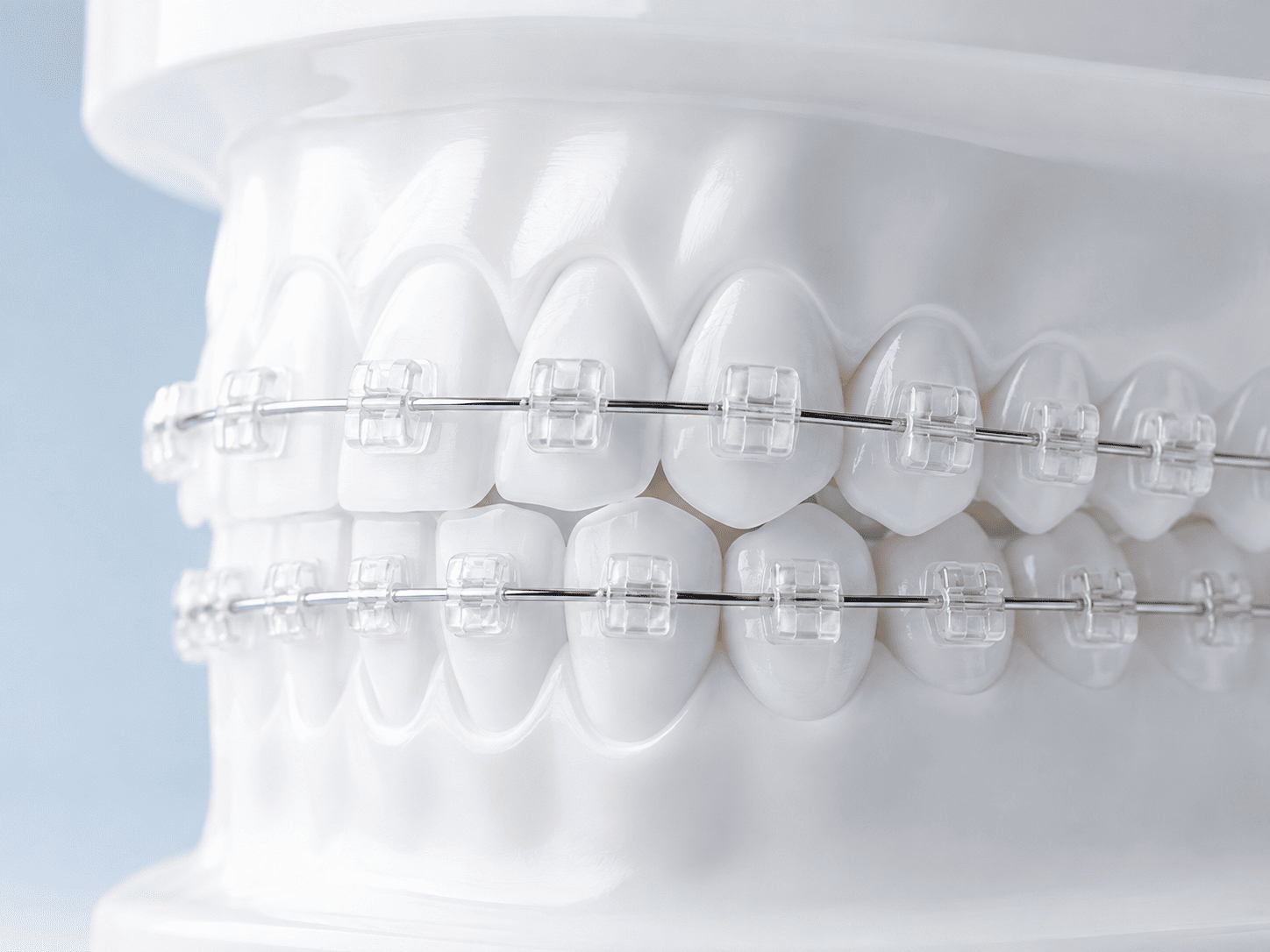
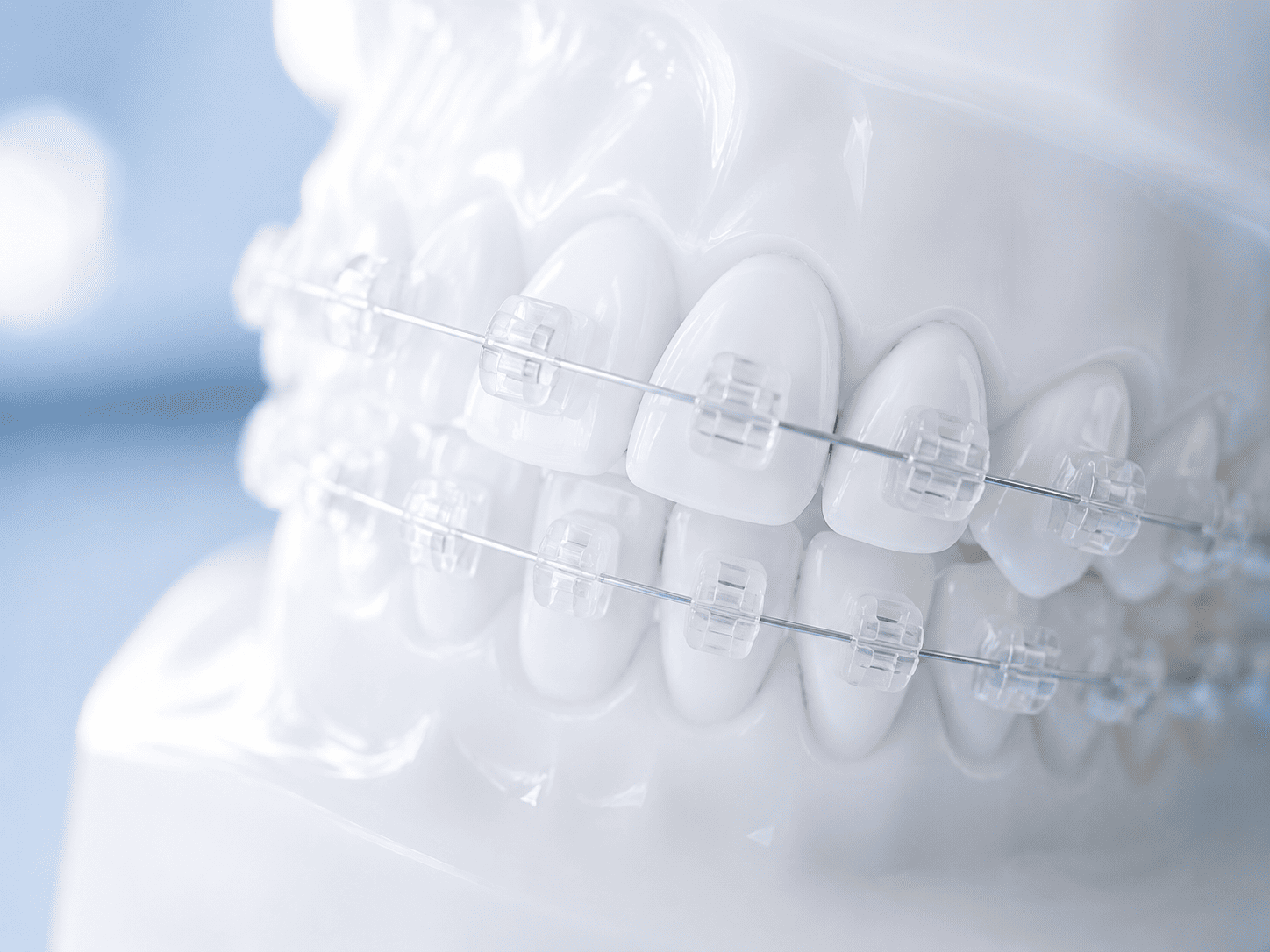
Do ceramic braces stain? This is the question most patients ask — and the honest answer is: the brackets themselves are stain-resistant, but the elastic ties (rubber bands) can stain and discolour with certain foods and drinks.
Do ceramic braces turn yellow? The ceramic bracket material is highly resistant to staining and will not change colour significantly during treatment. However, clear or white elastic ligature ties — if not replaced regularly — can absorb colour from coffee, tea, red wine, curry, tomato-based sauces, and other strongly pigmented foods. Since ties are changed at every adjustment appointment (every 6–8 weeks), any stained ties are replaced with fresh ones at each visit.
How to keep teeth white with ceramic braces: avoid or minimise highly pigmented foods and drinks immediately after adjustment when ties are freshest. Brush thoroughly after eating. Using a water flosser helps clean around brackets effectively.
Ceramic braces on yellow teeth: ceramic brackets are matched to the average tooth shade — on naturally yellow or discoloured teeth, ceramic brackets may stand out more than on whiter teeth. Dr. Hasan can advise on the best bracket shade for your specific tooth colour during consultation.
Ceramic braces vs metal braces is the most-searched braces comparison in the UAE — because it’s the most common decision patients face at their first orthodontic consultation.
| Ceramic Braces | Metal Braces | |
|---|---|---|
| Visibility | Much less visible — tooth-coloured brackets | Clearly visible — silver/steel colour |
| Staining Risk | Elastic ties can stain between appointments | No staining risk |
| Durability | Slightly less durable than metal | Highly durable, chip-resistant |
| Cost in Dubai | Typically 20–30% more than metal | Most affordable fixed option |
| Effectiveness | Identical — same results | Identical — same results |
| Comfort | Similar to metal; slightly larger bracket | Similar; slightly smaller bracket |
| Best for | Teens & adults who want less visibility | Patients prioritising cost or durability |
Which is better — ceramic or metal braces? Neither is clinically superior — the results are identical. The choice is about aesthetics and budget. Ceramic braces vs metal braces cost in Dubai: ceramic braces typically cost 20–30% more than metal. Should I get ceramic or metal braces? If the appearance of braces during treatment matters to you, ceramic is worth the additional cost. If price is the priority and visibility doesn’t concern you, metal braces are the right choice. Ceramic braces or metal braces better — there is no universal answer. See our Metal Braces page for a detailed comparison from the other direction.
Ceramic braces vs Invisalign is a comparison many adult patients consider — both offer a less visible treatment than metal braces, but they work very differently.
| Ceramic Braces | Invisalign / Clear Aligners | |
|---|---|---|
| Visibility | Less visible than metal; slightly visible | Nearly invisible |
| Removability | Fixed — cannot remove | Removable — worn 20–22 hrs/day |
| Compliance Needed | None — works 24/7 | High — must be worn consistently |
| Diet Restrictions | Avoid hard/sticky foods | None — remove to eat anything |
| Complex Cases | Handles full range of orthodontic problems | Better for mild-moderate; limitations with complex cases |
| Staining | Ties can stain; brackets do not | Aligners can discolour with certain drinks |
| Cost | Typically less than Invisalign | Typically higher |
| Best for | Patients wanting fixed treatment with less visibility | Adults with mild-moderate concerns who want removability |
Ceramic braces or Invisalign? If you want a fixed treatment that works without relying on you to wear something consistently, and your case is more than mild crowding, ceramic braces are likely the better clinical choice. If aesthetics is the absolute priority and your crowding is mild-to-moderate, Invisalign may suit you better. Dr. Hasan offers both and will give you an honest recommendation based on your specific case.
Ceramic braces cost in Dubai is typically 20–30% higher than metal braces, reflecting the higher material cost of ceramic brackets. How much do ceramic braces cost in Dubai? Ceramic braces price in Dubai and ceramic braces price in UAE vary based on the complexity of the case, treatment length, and the specific bracket type chosen (standard ceramic vs. self-ligating vs. sapphire).
Ceramic braces cost in Abu Dhabi: consistent pricing at Dr. Hasan’s Palmira Specialized Medical Center in Abu Dhabi. Are ceramic braces worth it? For most patients who ask this question, the answer depends on how much the appearance of braces during treatment matters to them. Clinically, you get identical results — you’re paying for discretion, not effectiveness.
Ceramic braces cost for adults: adult patients are often surprised to find that adult ceramic braces cost no more than ceramic braces for any other age group — orthodontic pricing is based on case complexity and treatment length, not on patient age.
Ceramic braces how long: treatment time with ceramic braces is the same as with metal braces — typically 18–24 months for most cases. Do ceramic braces take longer than metal braces? No — the mechanics are identical and treatment time is determined by the complexity of the case, not the bracket material. The archwire applies the same forces regardless of whether the brackets holding it are metal or ceramic.
Full examination, X-rays, and photographs. Dr. Hasan assesses your bite and alignment and provides a clear treatment plan and realistic timeline.
Ceramic brackets are bonded to each tooth using dental adhesive. The archwire is placed. Takes 60–90 minutes. Teeth will feel tender for 3–5 days as they begin to move.
Every 6–8 weeks. Wire adjusted, elastic ties replaced with fresh ones (so staining from the previous 6–8 weeks is cleared). Colour of ties can be changed at each visit. adhesive. The archwire is placed. Takes 60–90 minutes. Teeth will feel tender for 3–5 days as they begin to move.
Dr. Hasan tracks tooth movement and bite correction, adjusting the plan throughout treatment.
Once treatment is complete, brackets are removed and teeth polished. The ceramic bracket removal process is straightforward — the bracket is debonded cleanly. Takes approximately 60 minutes.
Provided immediately after removal. Essential for holding the result long-term.
Ceramic braces installation (fitting) is identical in process to metal braces — brackets are bonded to the tooth surface with a dental adhesive, the archwire is placed, and ties are applied. The appointment takes 60–90 minutes and causes no pain, though teeth will feel tender afterwards.
Ceramic braces are fixed orthodontic appliances that work identically to metal braces, but use tooth-coloured or clear ceramic brackets instead of metal ones. Also called clear ceramic braces, ceramic dental braces, or ceramic invisible braces, they are significantly less visible than metal braces while producing the same orthodontic results.
The ceramic brackets themselves do not stain. The elastic ties (rubber bands) holding the archwire in place can absorb colour from coffee, tea, red wine, and strongly pigmented foods. Since ties are replaced at every adjustment appointment (every 6–8 weeks), any staining is cleared regularly. Minimising highly pigmented food and drink immediately after an appointment keeps ties looking fresher for longer.
The ceramic bracket material is stain-resistant and will not yellow significantly during treatment. Clear or white elastic ties can discolour between appointments if you consume coffee, tea, or other strongly pigmented foods and drinks frequently. They are replaced at every adjustment, so discolouration is temporary.
Ceramic braces cost in Dubai is typically 20–30% more than metal braces, reflecting the higher cost of ceramic bracket materials. An accurate quote is given after your orthodontic assessment, once the treatment plan and length are confirmed.
For patients who care about the appearance of their braces during treatment, yes — ceramic braces deliver identical clinical results to metal braces with a significantly less visible appearance. The extra cost buys discretion, not effectiveness. If visibility doesn't concern you, metal braces are the more affordable option.
Ceramic braces take the same amount of time as metal braces — typically 18–24 months for most cases. Do ceramic braces take longer? No. Treatment time is determined by case complexity, not bracket material.
Less noticeable than metal braces, but not invisible. The tooth-coloured ceramic brackets blend with the teeth and are much harder to notice from a normal conversational distance. Up close, they are visible. With a white wire and clear ties, the overall appearance is quite discreet.
The bracket material. Ceramic braces use tooth-coloured or clear brackets; metal braces use stainless steel. The archwire, mechanics, and clinical results are identical. Ceramic braces cost more and are less durable than metal; metal braces are more affordable and more robust.
Ceramic braces cause the same tenderness as metal braces — typically 3–5 days of sensitivity after fitting and after each adjustment appointment, as the teeth respond to new pressure. The bracket material itself does not cause additional pain compared to metal. Over-the-counter pain relief and soft foods manage this comfortably.
Self-ligating ceramic braces use a built-in clip mechanism on each ceramic bracket instead of elastic ties to hold the archwire. This can reduce friction, may require fewer appointments, and makes cleaning slightly easier. They come in both metal and ceramic versions.
Ceramic braces are fixed — they stay on your teeth 24/7 and require no compliance. Invisalign uses removable clear aligners worn 20–22 hours a day. Ceramic braces can treat a wider range of orthodontic problems; Invisalign is better suited to mild-to-moderate crowding in motivated adult patients. Invisalign typically costs more than ceramic braces.
Neither is clinically better — both produce identical results. The choice is aesthetic and financial. Ceramic braces are less visible but cost more and carry a slight staining risk with the ties. Metal braces are more affordable and more durable. Should I get ceramic or metal braces? Choose ceramic if appearance matters; choose metal if price is the priority.
Yes. While the brackets are tooth-coloured (and the wire can be white-coated), the elastic ties come in a full range of colours — including ceramic braces with black bands, ceramic braces with silver bands, clear, or any colour. They are changed at every adjustment appointment. Best rubber color for ceramic braces for discretion: clear or white.
Sapphire braces use monocrystalline (single-crystal) aluminium oxide brackets — completely clear and slightly more translucent than standard polycrystalline ceramic. They are more resistant to staining than standard ceramic and are the most discreet fixed brace option. Sapphire braces typically cost more than standard ceramic braces. Ask Dr. Hasan whether sapphire brackets are available and suitable for your case.
Ceramic braces require the same specialist-level treatment planning as any other orthodontic appliance — the brackets may be less visible, but the clinical demands of moving teeth three-dimensionally into the correct position are identical. The result depends on the expertise of the orthodontist planning and monitoring your treatment.
A consultation with Dr. Hasan will assess your teeth, bite, and jaw alignment, and give you a clear comparison of ceramic braces, metal braces, and Invisalign for your specific case — along with an accurate quote and realistic treatment timeline.

The goal of our clinic is to provide friendly, expert orthodontic care for patients of all ages — from young children receiving their first orthodontic assessment to adults discovering that the right time for treatment is now.
Copyright © 2026 Rights Reserved. Website by TDMA
WhatsApp us