Children's Orthodontic Treatment Dubai
- Home
- Children’s Orthodontic Treatment Dubai

Children's Orthodontic Treatment in Dubai
Early treatment by a specialist orthodontist — because the best time to straighten a child's smile is often before the problem is fully developed.
Children’s orthodontic treatment is about much more than straightening teeth. For many children, the most impactful treatment happens between the ages of 7 and 12 — before all the adult teeth have come through — when a specialist can use the natural growth process to correct jaw discrepancies, guide teeth into better positions, and prevent problems that would require much more complex treatment in adulthood.
Dr. Hasan Odeh is a specialist orthodontist with 20 years of clinical experience, including extensive experience with children’s orthodontics — from early interceptive treatment and growth modification through to full fixed brace treatment for teenagers. His practice at Gemini Medical Center in Al Safa, Dubai sees patients from childhood through adulthood.
When Should a Child First See an Orthodontist?
At what age should kids get braces — or more precisely, at what age should a child first be seen by an orthodontist? The American Association of Orthodontists (AAO) — of which Dr. Hasan is a member — recommends that every child has their first orthodontic screening by age 7.
Why age 7? By this age, a child typically has a mix of baby and adult teeth that gives an experienced orthodontist enough information to assess jaw development, the incoming adult teeth, and whether early intervention would be beneficial. Most children seen at age 7 don’t need treatment immediately — but identifying potential issues early means problems can be monitored and addressed at the optimal window, not after they’ve become significantly more complex.
When do kids get braces? What age do kids get braces? This varies significantly by case. Some children benefit from early treatment (Phase 1) between ages 7–10. Most begin full brace treatment (Phase 2) between ages 11–14, once the majority of adult teeth have come through. There is no single ‘right age’ — the right time depends on the individual child’s dental and jaw development.
Signs your child should be seen sooner:
- Teeth that are noticeably crowded, overlapping, or widely spaced
- An overbite (top teeth significantly covering the bottom), underbite (bottom teeth in front of top teeth), or crossbite
- Early, late, or irregular loss of baby teeth
- Difficulty biting or chewing
- Mouth breathing or snoring — can indicate jaw development issues
- Thumb sucking or dummy use beyond age 4–5
- Teeth that don’t meet properly when biting
- The child’s face appearing asymmetric or the jaw shifting to one side when biting
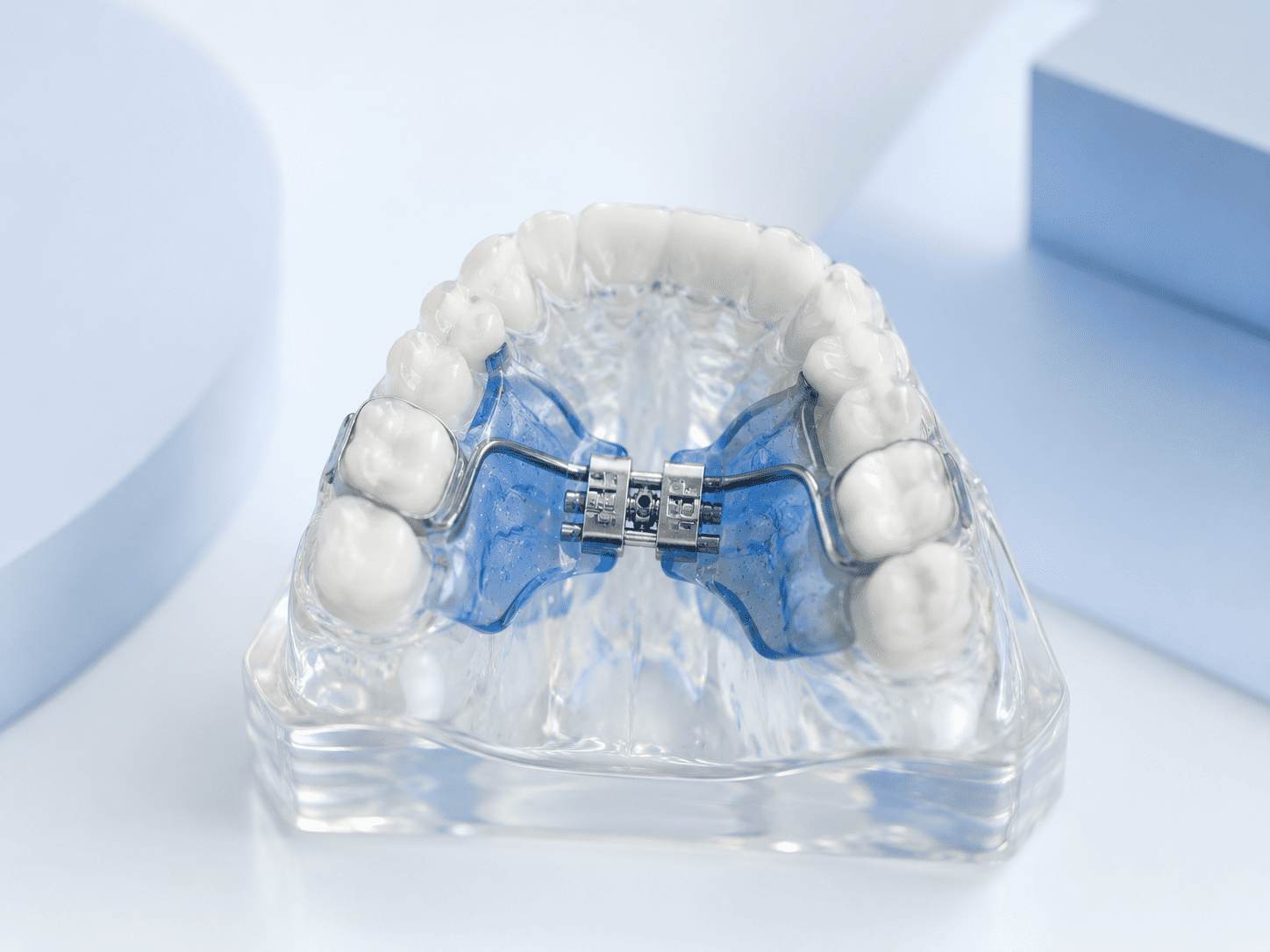
Early Orthodontic Treatment: What Is Phase 1 and Who Needs It?
Early orthodontic treatment — sometimes called Phase 1 or interceptive orthodontic treatment — refers to treatment that begins while the child still has a mixture of baby and adult teeth, typically between ages 7 and 10. Not every child needs it, but for those who do, it can make a significant difference to the outcome of their overall treatment.
The goal of Phase 1 is not to fully straighten all the teeth — that comes later in Phase 2 when the adult teeth are fully present. Phase 1 is about correcting underlying jaw or skeletal problems while the bones are still growing and responsive to guidance. Waiting until all adult teeth are present often means these issues can no longer be corrected with appliances alone and may require surgery in adulthood.
What Phase 1 treatment can address:
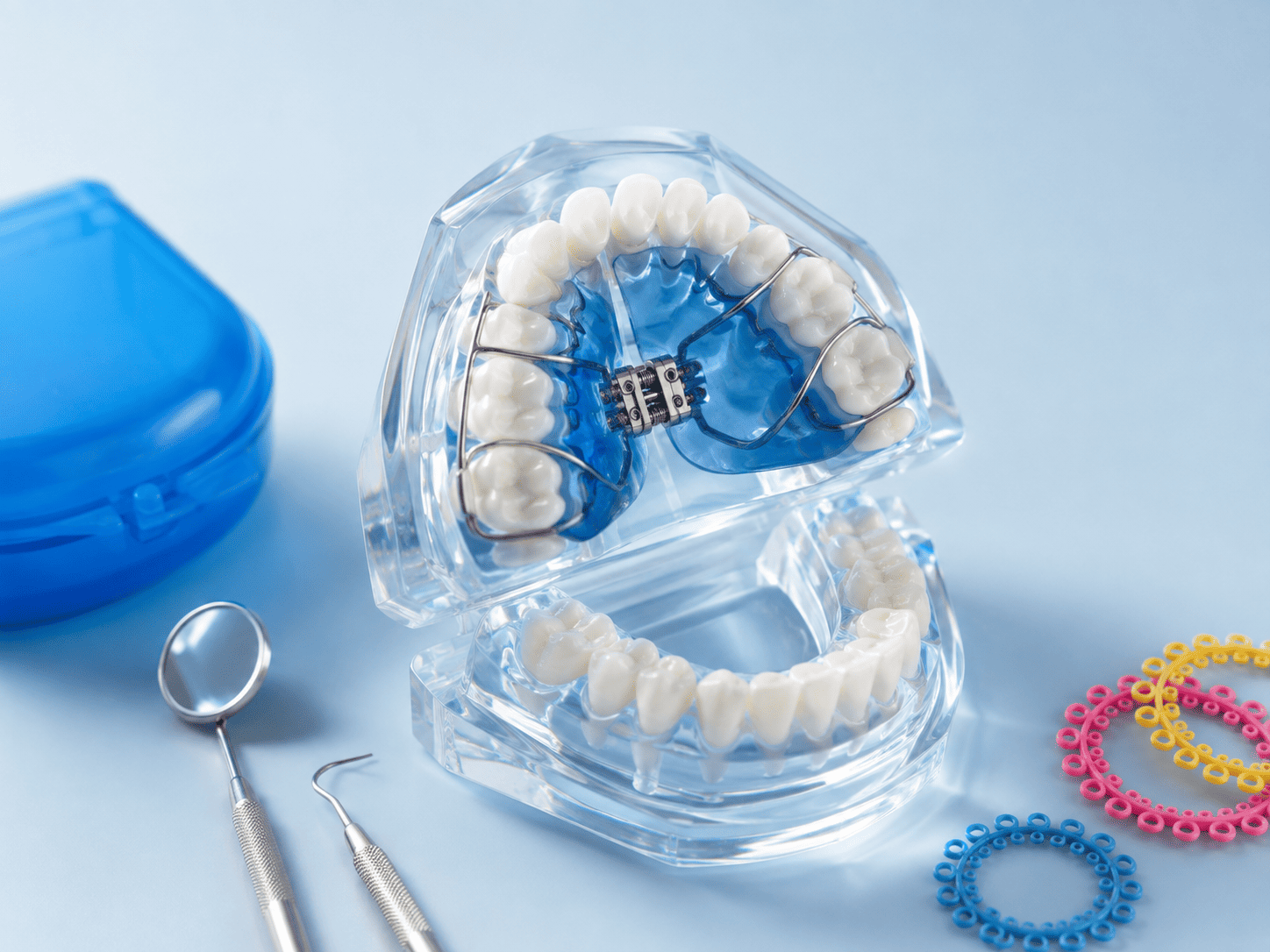
- Jaw width problems — a narrow upper jaw (palatal constriction) causing a crossbite can be expanded with a palatal expander while the child is still growing
- Overbite and overjet — significant protrusion of the upper front teeth can be reduced with functional appliances during the growth period
- Underbite correction — a reverse bite in young children responds much better to early treatment than in adolescents or adults
- Space management — if baby teeth are lost too early, space maintainers prevent neighbouring teeth from drifting and blocking the incoming adult teeth
- Habit breaking — thumb sucking and tongue thrust habits that are affecting jaw and tooth development can be addressed with habit breaker appliances
- Guiding incoming teeth — in some cases, removing specific baby teeth or creating space early guides adult teeth into better positions naturally
Phase 1 vs. Phase 2 Orthodontics: What's the Difference?
| Phase 1 — Early Interceptive Treatment | Phase 2 — Full Orthodontic Treatment | |
|---|---|---|
| Timing | Ages 7–10 (mixed dentition — baby + adult teeth) | Ages 11–16 (most or all adult teeth present) |
| Goal | Correct jaw growth, skeletal problems, habits | Fully align teeth and bite to final position |
| Appliances | Expanders, functional appliances, habit breakers, limited braces | Full fixed braces (metal, ceramic) or clear aligners |
| Duration | Typically 9–18 months | Typically 12–24 months |
| Who Needs It | Children with jaw discrepancies, crossbite, underbite, severe habits | Most orthodontic patients — with or without Phase 1 |
| Not Needed If | Teeth/jaw are developing within normal limits | Already completed — proceed to Phase 2 directly |
Does every child need Phase 1? No. Many children wait until Phase 2 without any disadvantage. The decision to recommend early treatment is based on a clinical assessment of whether waiting would make treatment significantly more difficult or less effective — or whether surgery might be needed in adulthood to achieve a result that appliances could achieve now.
Types of Children's Orthodontic Treatment at Dr. Hasan's Practice
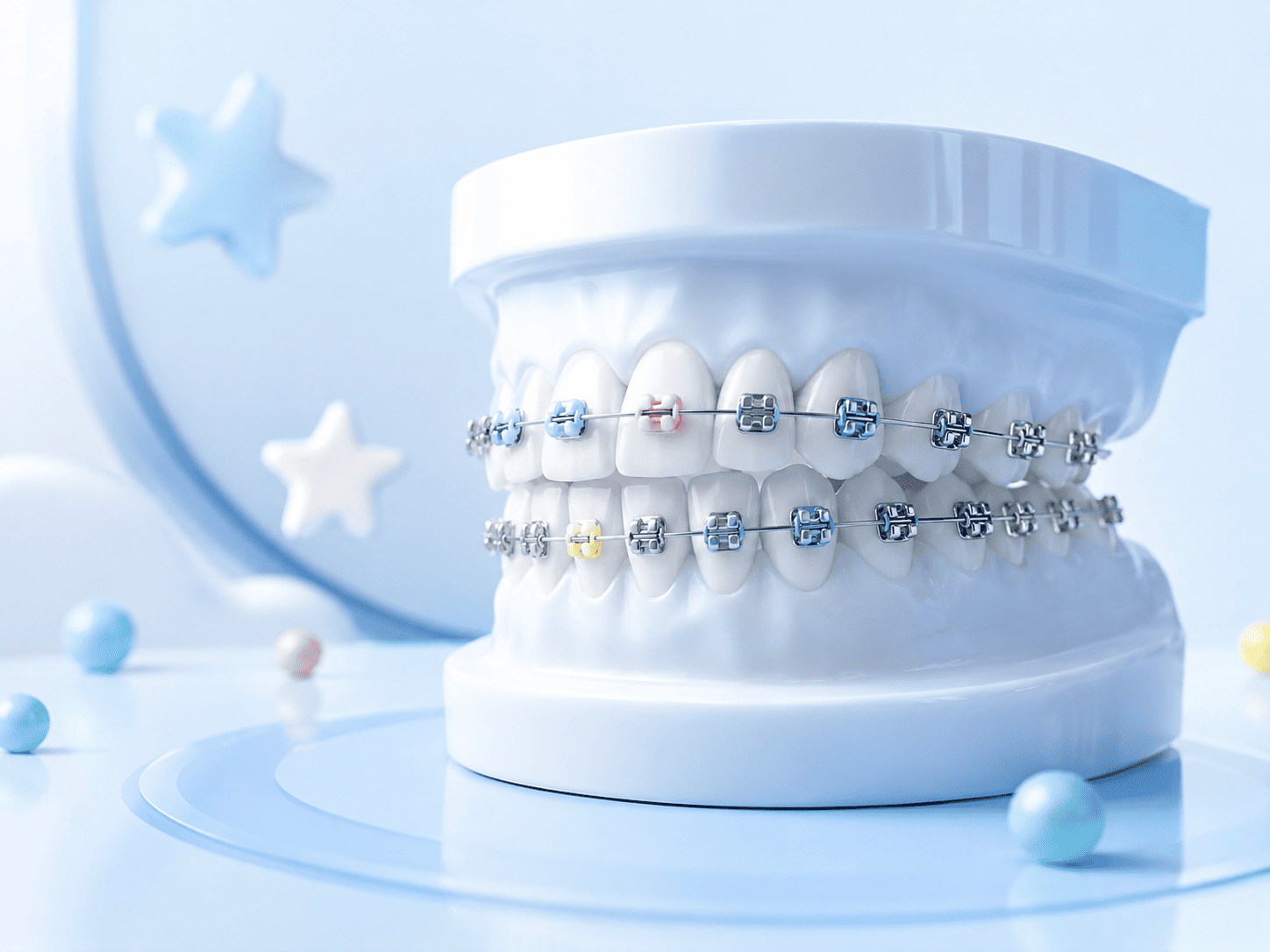
Metal Braces for Children
The most effective and most commonly used treatment for children and teenagers with moderate to complex orthodontic needs. Kids dental braces using metal brackets and archwires can correct the full range of crowding, spacing, and bite issues. Today’s metal braces are smaller, smoother, and more comfortable than a generation ago. Kids braces colours — the elastic ties come in a wide range of colours, which most children enjoy choosing at each appointment. See our Metal Braces page for full detail.
Ceramic Braces for Children and Teenagers
Tooth-coloured ceramic brackets that are far less visible than metal. A popular choice for self-conscious teenagers who want the effectiveness of fixed braces without the visible metal appearance. Clear braces for kids — ceramic braces are sometimes called this. See our Ceramic Braces page for full detail.
Clear Aligners for Teenagers (Invisalign Teen)
Invisalign and other clear aligner systems offer specific products designed for teenagers, including compliance indicators (small dots that fade with wear, so parents and orthodontists can tell if the aligners are being worn as required). Invisible braces for kids in the aligner sense are suitable for teenagers with mild-to-moderate crowding who are reliable about wearing them consistently. They are generally not recommended for younger children. See our Invisalign & Clear Aligners page for full detail.
Functional Appliances
Removable or fixed appliances that harness jaw growth to correct significant overbite or underbite discrepancies in growing children. These are used when the difference in jaw size or position is the primary issue — not simply tooth position. Functional appliance therapy is most effective during the growth peak (typically ages 9–13 for girls, 10–14 for boys) and is one of the most important reasons for early orthodontic assessment.
Palatal Expanders
A fixed appliance cemented across the upper teeth that gradually widens the upper jaw (palate) to correct a narrow arch or crossbite. Most effective in children aged 7–14 whose palatal suture has not yet fused. After this age, palatal expansion becomes significantly more complex — requiring either orthodontic surgery or a specialised device like MARPE for adults. The ease with which this is treated in childhood versus adulthood is one of the strongest arguments for early screening.
Habit Breaker Appliances
Thumb sucking and dummy habits that persist beyond age 4–5 can cause significant changes to the bite and jaw development — pushing the front teeth forward, narrowing the upper arch, and causing an open bite. Habit breaker appliances make thumb sucking mechanically uncomfortable, helping break the habit before it causes lasting damage. These are gentle, fixed devices — not painful — and are highly effective when introduced at the right time.
Space Maintainers
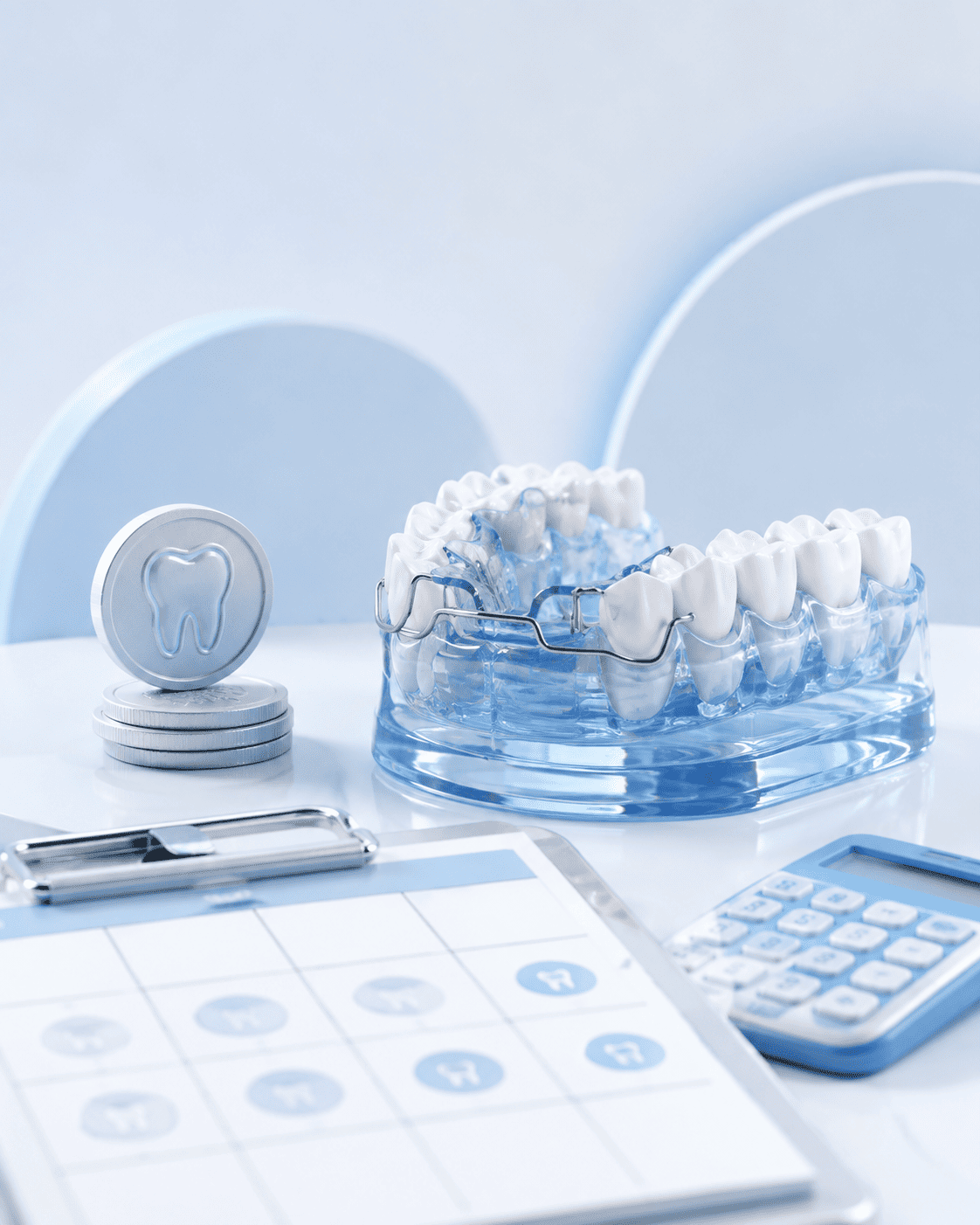
When a baby tooth is lost early — through decay, injury, or early extraction — the neighbouring teeth can drift and close the space that an adult tooth needs. A space maintainer is a simple fixed or removable device that holds the gap open until the adult tooth is ready to come through. Without one, the adult tooth may come in crowded or impacted, requiring significantly more complex treatment later.
How Much Do Braces Cost for Kids in Dubai?
Cost of braces for kids and how much do braces cost for kids in Dubai varies based on the type of treatment, whether Phase 1 early treatment is involved, and the complexity and duration of the case. Children’s orthodontic treatment pricing follows the same structure as adult treatment — it is not more expensive because the patient is younger, and it is not cheaper simply because the teeth are smaller.
Affordable braces for kids: metal braces remain the most cost-effective fixed orthodontic option for children and teenagers, producing excellent results at the lowest material cost. Insurance that covers braces for kids in Dubai: many UAE health insurance plans include a dental or orthodontic benefit — check your policy’s orthodontic coverage limit and whether specialist orthodontist treatment is covered before your consultation.
Your Child's First Orthodontic Assessment with Dr. Hasan
A first orthodontic assessment for a child is a low-pressure, examination-only appointment. No treatment is done at this visit — it is purely about understanding where your child is in their dental development and whether any action is needed now, soon, or simply in the future.
Dr. Hasan examines your child's teeth, bite, jaw alignment, and oral habits. He checks for crowding, spacing, bite problems, and any signs of jaw discrepancy.
Panoramic (full mouth) and/or cephalometric (side-profile jaw) X-rays may be taken to assess tooth development, root positions, and jaw growth.
Dr. Hasan explains clearly whether early treatment is recommended, why, and what the alternative is if you wait. If monitoring is all that's needed, he'll tell you that.
If treatment is recommended, you'll receive a clear plan covering what appliances are needed, when treatment would start, how long it would take, and what it would cost.
If no immediate treatment is needed, a monitoring appointment is scheduled for 6–12 months to reassess development
Frequently Asked Questions
The American Association of Orthodontists recommends a first orthodontic screening by age 7. Most children at this age don't need immediate treatment — but assessing jaw development early allows any problems to be identified and addressed at the optimal window, rather than after they've become significantly harder to treat.
When do kids get braces depends on the child. Some children benefit from early (Phase 1) treatment between ages 7–10, particularly for jaw problems, crossbites, or habits like thumb sucking. Most children begin full brace treatment (Phase 2) between ages 11–14 once most adult teeth are present. There is no single right age — it's determined by the individual child's development.
There's no set age. Early treatment can start as young as 7 for specific jaw or bite problems. Full braces typically begin between 11 and 14. Some children have perfectly well-developing teeth and don't need braces at all. An orthodontic assessment at age 7 tells you which category your child is in.
Not all children do. Phase 1 is recommended when waiting would make treatment significantly harder or less effective — particularly for jaw discrepancies (narrow palate, underbite, significant overbite), crossbites, and habits that are actively damaging development. If your child's development is within normal limits, Dr. Hasan will tell you so and recommend monitoring only.
Types of braces for kids include: metal braces (most common, most affordable, highly effective), ceramic braces (tooth-coloured, less visible), and clear aligners (for teenagers with mild-moderate cases who will wear them consistently). Younger children are more typically treated with fixed metal braces or Phase 1 appliances. Clear braces for kids — ceramic or aligner options are available from around age 11–12 when most adult teeth are present.
A habit breaker is a fixed orthodontic device that discourages thumb sucking or dummy habits that are affecting jaw and tooth development. It makes thumb placement uncomfortable without being painful. These habits, if they persist beyond age 4–5, can cause the front teeth to protrude, the upper arch to narrow, and an open bite to develop — all of which are significantly easier to prevent than to correct.
A space maintainer is a small fixed or removable device placed after a baby tooth is lost early, to hold the gap open for the incoming adult tooth. Without one, neighbouring teeth drift into the space, causing the adult tooth to come in crowded or impacted.
A palatal expander is a fixed appliance that gradually widens the upper jaw to correct a narrow arch or crossbite. It is most effective in children aged 7–14 while the palate is still growing. After this age, the palate fuses and expansion becomes significantly more complex — requiring surgery or a specialised device like MARPE. This is one of the clearest examples of why early orthodontic screening matters.
Cost of braces for kids in Dubai depends on the treatment type and complexity. Metal braces are the most affordable fixed option. Early treatment appliances (expanders, functional appliances) are priced separately from Phase 2 braces. An accurate quote is given after Dr. Hasan's assessment of your child's specific needs.
Many UAE health insurance plans include an orthodontic benefit. Check your policy for the orthodontic coverage limit and whether specialist orthodontist treatment is covered. Dr. Hasan's clinic can advise on documentation needed for insurance claims.
Invisible braces for kids and clear braces for kids — ceramic braces are suitable for teenagers from around age 11–12 when most adult teeth are present. Clear aligners (Invisalign Teen) are suitable for teenagers with mild-moderate crowding who will reliably wear them 20–22 hours per day. For younger children or complex cases, metal braces or specialist appliances are typically more appropriate.
A paediatric dentist focuses on dental health — fillings, extractions, prevention, and general care for children's teeth. An orthodontist specialises in the alignment of teeth and jaws. Dr. Hasan is a specialist orthodontist — not a general dentist — with three postgraduate Master's degrees specifically in orthodontics. For braces and jaw development concerns, a specialist orthodontist is the appropriate provider.
Why Trust Dr. Hasan Odeh with Your Child's Orthodontic Treatment?
Children’s orthodontic treatment — particularly early interceptive treatment — requires a level of clinical judgement that goes well beyond simply fitting braces. Knowing when to intervene, when to monitor, and when waiting is the right call requires genuine specialist training and extensive clinical experience with growing patients.
Key credentials
- Specialist Orthodontist — dedicated to orthodontics, not a general dentist fitting braces as a side service
- 20 years of clinical experience — thousands of cases including growth modification, functional appliances, and early interceptive treatment
- Three Master's degrees in Orthodontics: Malmö University (Sweden), European University College (UAE), University of Sains Malaysia
- Member, American Association of Orthodontists (AAO) — which sets the age 7 screening guideline
- Member, World Federation of Orthodontists (WFO)
- Experience with the full range of children's orthodontic appliances: habit breakers, space maintainers, functional appliances, palatal expanders, and fixed braces
- Two locations: Gemini Medical Center Dubai (Al Safa) | Palmira Specialized Medical Center Abu Dhabi
Book Your Child's Orthodontic Assessment in Dubai
Whether your child is 7 or 15, a specialist orthodontic assessment gives you a clear picture of their dental development, honest advice on whether treatment is needed now or later, and a plan that sets them up for a lifetime of healthy teeth and a confident smile.
- Gemini Medical Center, Al Ferdous Building 4, Office 119, Al Wasl Rd, Al Safa 1, Dubai
- Palmira Specialized Medical Center, Abu Dhabi