

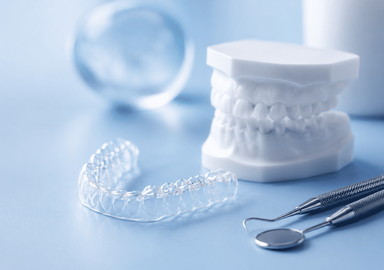
Invisalign is the world’s most recognised brand of clear aligner — a series of removable, nearly invisible trays that gradually move teeth into their correct positions without metal brackets or wires. Dr. Hasan Odeh offers Invisalign and clear aligner treatment in Dubai at Gemini Medical Center in Al Safa, with the same specialist orthodontic planning that applies to every case regardless of the appliance used.
A note on terminology: patients search for ‘Invisalign braces,’ ‘clear aligners,’ and ‘invisible braces’ — these terms all refer to the same category of treatment. Invisalign is a brand of clear aligner. Dr. Hasan offers Invisalign as well as other clear aligner systems, and will recommend the right option for your specific case.
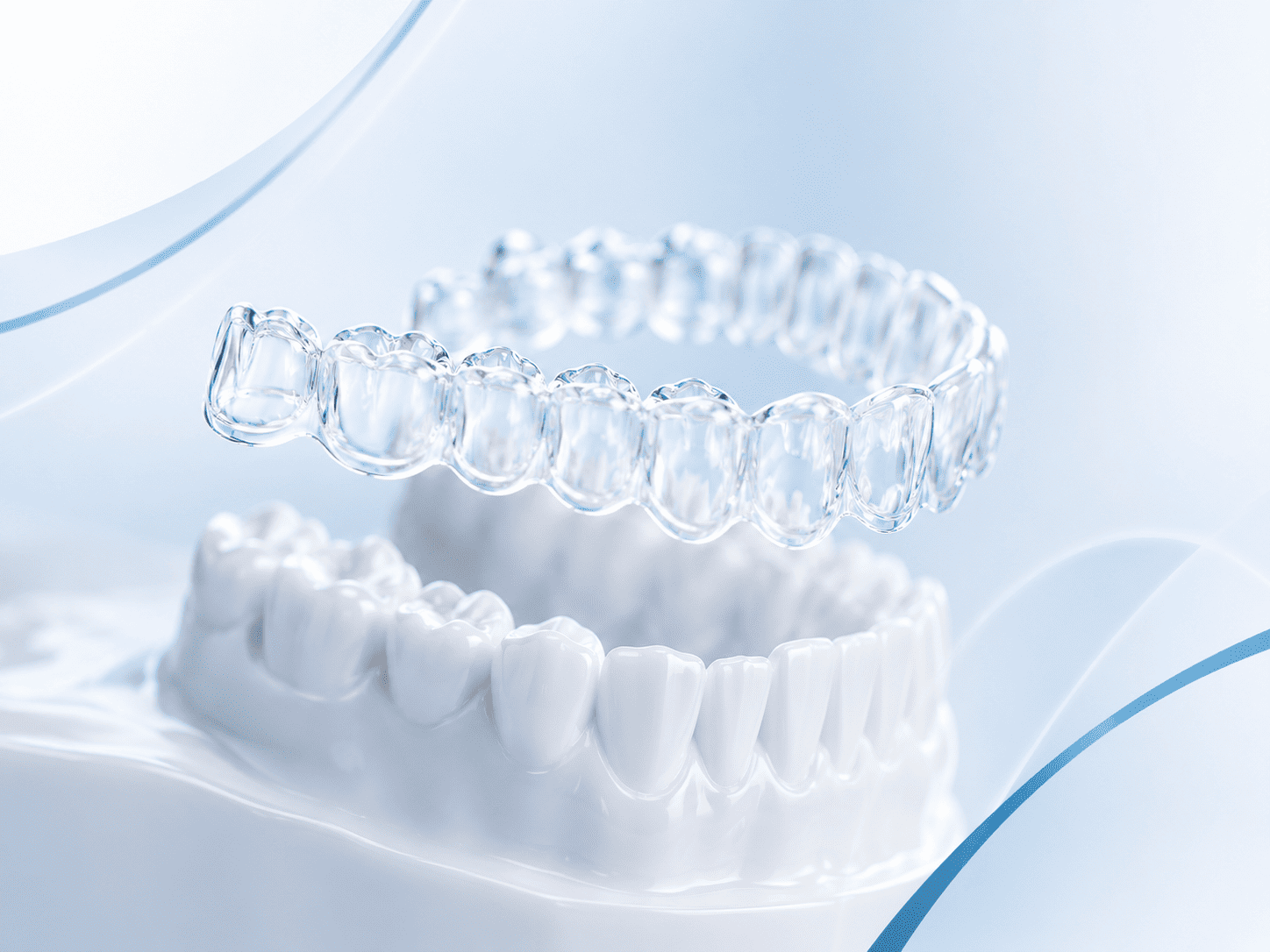
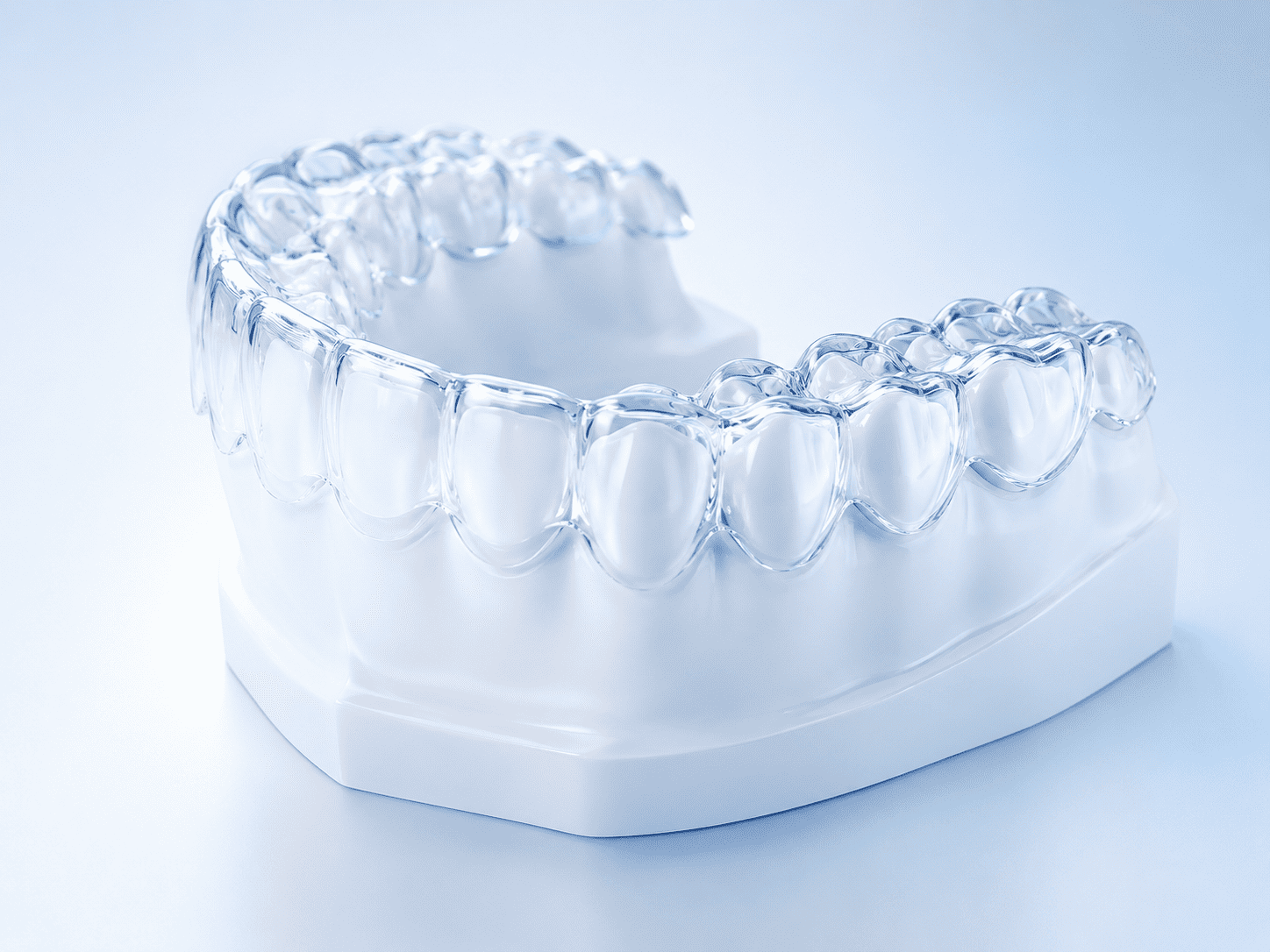
Clear aligners are a modern form of orthodontic treatment — a series of custom-made, removable plastic trays that fit snugly over your teeth and apply gentle controlled pressure to move them gradually into their correct positions. Each set of trays is worn for approximately 1–2 weeks before moving to the next in the sequence.
Invisalign braces meaning: the word ‘Invisalign’ is technically a brand name for clear aligners manufactured by Align Technology. It has become the most widely recognised name in the category — similar to how ‘Hoover’ became a generic name for vacuum cleaners. Other clear aligner brands include Spark, ClearCorrect, and Clear Path, among others. The underlying treatment principle is the same across brands.
How do clear aligners work? Treatment is entirely computer-planned: digital scans of your teeth are used to simulate the full tooth movement from your current position to the ideal final result. You see your predicted outcome before treatment begins. The aligner trays are then manufactured based on this plan, with each tray representing a small step in the movement sequence.
Clear aligner therapy is particularly popular with adults and teenagers who want effective orthodontic treatment without the visibility of metal or ceramic brackets — and the flexibility of being able to remove the aligners for eating, drinking, brushing, and special occasions.
Who can use Invisalign braces? Clear aligners are suitable for a wide range of patients — but not all cases. They work best for:
The most important thing: clear aligners are not automatically ‘better’ than braces, or vice versa. The right treatment is the one that matches your case complexity, your lifestyle, and your orthodontic goals. Dr. Hasan’s consultation gives you an honest comparison for your specific bite — not a sales pitch for whichever treatment the practice promotes.
This is the question at the heart of most first consultations. Here is an honest comparison — written by a specialist who offers both, and who recommends based on your case rather than on which treatment is more profitable.
| Clear Aligners (Invisalign) | Braces (Metal or Ceramic) | |
|---|---|---|
| Visibility | Nearly invisible — clear plastic trays | Metal: clearly visible | Ceramic: less visible |
| Removability | Removable — take out to eat, drink, brush | Fixed — cannot remove during treatment |
| Compliance Required | High — must wear 20–22 hrs/day consistently | None — works 24/7 automatically |
| Diet Restrictions | None — remove aligners to eat anything | Avoid hard/sticky foods |
| Cleaning | Remove aligners, brush normally | More care needed around brackets and wires |
| Complex Cases | Mild to moderate crowding, spacing, mild bites | Full range — including complex bites & rotations |
| Tooth Rotation | Limited — attachments help but less precise | Excellent — full three-dimensional control |
| Vertical Movement | Limited | Excellent |
| Overbite/Underbite | Mild to moderate cases | Mild to severe cases |
| Treatment Visibility | See predicted result before starting | Estimated timeline — no digital preview |
| Cost in Dubai | Typically higher than metal; similar to ceramic | Metal: most affordable | Ceramic: moderate |
| Best for | Adults/teens with mild-moderate cases who prioritise aesthetics & flexibility | Complex cases; children; patients who need reliability without compliance |
Is Invisalign faster than braces? Are braces faster than Invisalign? For simple cases, treatment times are broadly similar. For complex cases, braces are often faster and more reliable. Does Invisalign work faster than braces? No universal answer — it depends entirely on the case complexity.
Is Invisalign more expensive than braces? Which is cheaper — braces or Invisalign? Clear aligners are typically more expensive than metal braces and similar in cost to ceramic braces. Price difference between braces and Invisalign in Dubai depends on case complexity and treatment length. Are braces more effective than Invisalign? For complex cases, yes. For mild-moderate cases, outcomes are comparable when the aligner is worn consistently.
Braces vs Invisalign pain: both cause some tenderness when pressure is applied — after fitting braces and after each aligner change. Neither is significantly more painful than the other; the sensation is similar.
Incognito braces vs Invisalign, lingual braces vs Invisalign, hidden braces vs Invisalign — these comparisons come up for patients who want invisible treatment but may not be suitable for clear aligners. Lingual braces are fixed brackets placed on the inside (tongue-side) of the teeth, making them invisible from the front. They can handle more complex cases than clear aligners. They typically cost more than both Invisalign and conventional braces, and have a longer adaptation period for speech. See our Invisible Braces page for a full three-way comparison.
Wearing Your Aligners
Can I Eat with Invisalign Braces?
Can I eat with Invisalign braces? No — aligners must be removed for all eating and drinking (except still water). This is one of the main advantages over fixed braces: no food restrictions whatsoever. Eat what you like, then clean your teeth and put aligners back in.
How to Clean Clear Aligners
How to clean clear aligners: rinse in lukewarm (not hot) water every time you remove them. Brush gently with a soft toothbrush and clear liquid soap — not toothpaste, which can scratch the plastic. Soak in denture cleaner or Invisalign cleaning crystals periodically. Never leave aligners soaking in coloured mouthwash, which will tint them. Brush and floss your teeth before replacing aligners after eating.
Do Clear Aligners Hurt?
Do clear aligners hurt? Do Invisalign braces hurt? Aligners cause mild pressure and soreness for the first day or two after switching to a new set of trays — this is normal and indicates the teeth are being moved. It typically reduces within 48 hours. Over-the-counter pain relief manages this comfortably. Clear aligners do not have sharp brackets or wires that can irritate the cheeks.
Clear aligners cost in Dubai is typically higher than metal braces and broadly comparable to ceramic braces, reflecting the digital planning, custom manufacture, and aligner system technology involved. How much do clear aligners cost in Dubai? How much do Invisalign braces cost? An accurate quote requires a consultation and full treatment plan, since case complexity and treatment length drive the cost significantly — a 6-month mild case costs less than an 18-month moderate case.
Teeth clear aligners cost Dubai: the cost typically covers all aligner sets for the planned treatment, all progress appointments, and refinement trays if needed. Retainers at the end of treatment may be included or priced separately — confirm at consultation.
Clear aligners cost in Abu Dhabi: consistent pricing at Dr. Hasan’s Palmira Specialized Medical Center in Abu Dhabi.
Dr. Hasan examines your teeth, bite, and jaw alignment to assess whether clear aligners are suitable for your case. If they are, he'll explain the realistic outcome and timeline.
Impressions or 3D digital scans are taken. A full digital treatment plan is created, showing your predicted tooth movement from start to finish. You approve the planned outcome before any trays are made.
Your custom set of trays is manufactured to the exact specifications of your treatment plan.
Small tooth-coloured composite buttons may be bonded to specific teeth to help the aligners achieve more precise movements. These are removed at the end of treatment.
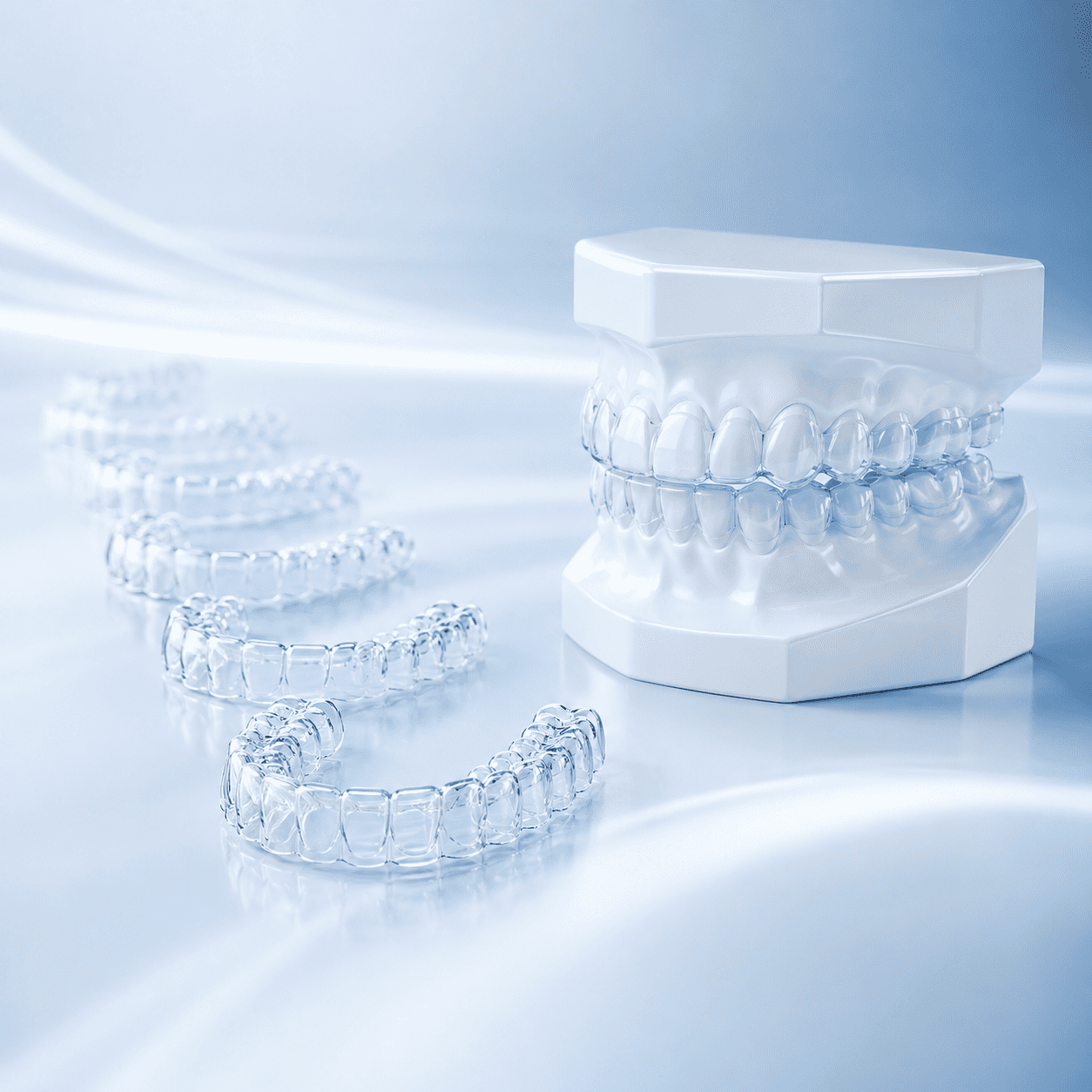
Each set of trays is worn for 1–2 weeks, 20–22 hours per day. The remaining 2–4 hours allow for eating, drinking anything other than water, and brushing.
Dr. Hasan monitors treatment every 6–8 weeks, checking that teeth are tracking as planned and making any refinements needed.
If teeth haven't moved exactly as planned, additional aligner trays can be added to achieve the ideal result.
On completion, retainers are provided to hold the result. This is essential — without retainers, teeth will shift back.
How long do Invisalign braces take? How long do clear aligners take? Treatment length depends on case complexity. Mild cases: 6–12 months. Moderate cases: 12–18 months. More complex cases: 18–24+ months. The digital treatment plan gives you an estimated timeline from the start
Invisalign is the world's leading brand of clear aligner — a series of custom-made, removable, nearly invisible plastic trays that gradually move teeth into their correct positions. 'Clear aligners' is the generic term for this type of treatment. Other brands include Spark, ClearCorrect, and Clear Path. Invisalign braces meaning: the term combines the brand name with the colloquial term 'braces,' even though clear aligners are not technically braces — they work very differently.
It depends entirely on the case. For mild to moderate crowding, spacing, and bite issues in patients who will wear aligners consistently, clear aligners are an excellent option. For complex bite problems, significant tooth rotation, vertical corrections, or patients who cannot reliably wear a removable appliance 20–22 hours daily, braces typically produce more reliable results. Dr. Hasan offers both and recommends based on your specific case.
Not universally. For simple cases, treatment times are broadly similar. For complex cases, braces are often faster. Does Invisalign work faster than braces? Only for cases where aligners can achieve the full movement needed — which is not all cases. The most important factor is whether the treatment is right for your bite, not which finishes first.
Clear aligners typically cost more than metal braces and are broadly similar to ceramic braces in Dubai. The exact price difference depends on case complexity and treatment length. Are braces or Invisalign cheaper? Metal braces are consistently the most affordable fixed orthodontic option.
Yes, in mild to moderate cases. Can clear aligners fix overbite? Aligners with specific attachments and bite ramps can address overbite — but severe skeletal overbites or significant jaw discrepancies may require braces and possibly jaw surgery for the best result.
How long do Invisalign braces take? Mild cases: 6–12 months. Moderate cases: 12–18 months. More complex cases can take longer. The digital treatment plan gives an estimated timeline from the start, which Dr. Hasan can walk you through at consultation.
20–22 hours per day. The remaining 2–4 hours are for eating, drinking (anything other than still water), and cleaning your teeth. Wearing less than 20 hours per day consistently will cause your teeth to fall behind the planned tracking — which can extend treatment time or require additional trays.
Yes — remove the aligners before eating and there are no food restrictions whatsoever. This is one of the main lifestyle advantages over fixed braces. Clean your teeth before replacing aligners after eating.
Invisalign is a brand of clear aligner with specific technology (SmartTrack material, SmartForce attachments) developed over two decades. Other clear aligner brands use similar principles with different materials and systems. The difference between clear aligners and Invisalign is largely about the specific brand and technology — the treatment experience is broadly similar across established aligner systems.
Not always. 'Invisible braces' is a term patients use for several different treatments: clear aligners (Invisalign and others), ceramic braces (tooth-coloured but fixed), and lingual braces (fixed, placed on the inside of the teeth). Clear aligners are the most truly invisible option. See our Invisible Braces page for a full explanation of the differences.
Pros: nearly invisible, removable, no food restrictions, easier cleaning, see your result before starting. Cons: requires strict wearing compliance, less effective for complex cases, typically costs more than metal braces, aligners must be removed for eating and drinking. Disadvantages of Invisalign braces: results depend entirely on how consistently you wear the aligners — if you frequently forget or lose them, braces will produce a better result.
Absolutely. Adult clear aligner treatment is very common and very effective. Braces for adults Invisalign: many adults choose clear aligners specifically because they don't want visible metal during treatment. Braces or Invisalign for adults comes down to case complexity and preference.
Clear aligner treatment is only as good as the orthodontist planning it. The digital software produces a simulation — but the orthodontist decides what that simulation should achieve, which movements are realistic, and how the final bite should look. This requires specialist orthodontic training, not just access to the aligner system.
A consultation with Dr. Hasan will assess whether clear aligners are right for your specific case — and give you an honest comparison with braces if both are suitable options. You’ll see your predicted digital result and get a full treatment quote before committing to anything.

The goal of our clinic is to provide friendly, expert orthodontic care for patients of all ages — from young children receiving their first orthodontic assessment to adults discovering that the right time for treatment is now.
Copyright © 2026 Rights Reserved. Website by TDMA
WhatsApp us