
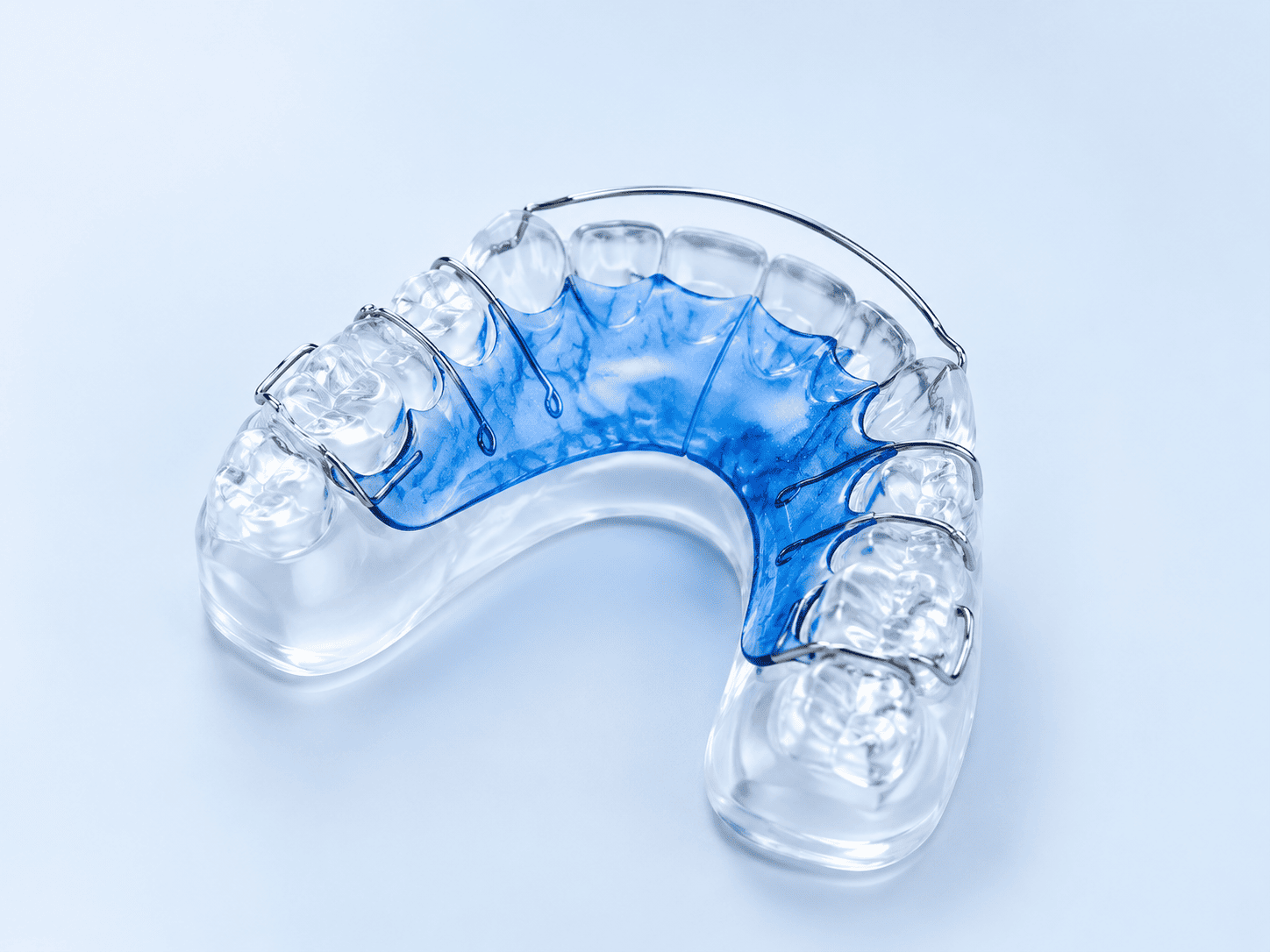

Orthodontic treatment moves teeth into their ideal positions. Retainers keep them there. Without a properly worn retainer after braces or clear aligner treatment, teeth will shift — it’s not a possibility, it’s a biological certainty. Dr. Hasan Odeh, specialist orthodontist with 20 years of experience, provides retainers and retainer replacements in Dubai, and treats patients whose teeth have relapsed after previous orthodontic treatment.
This page covers two distinct situations: patients who have just finished orthodontic treatment and need a retainer, and patients whose teeth have moved back after previous treatment and are considering relapse correction.
What is a dental retainer? A dental retainer is an orthodontic appliance — fixed or removable — worn after braces or clear aligner treatment to hold teeth in their new positions while the surrounding bone and tissue stabilise. The teeth themselves move during orthodontic treatment; the retainer’s job is to maintain that position while the bone remodels around the new root positions.
Why is a retainer necessary after braces? Teeth are held in place by the periodontal ligament — a network of fibres connecting the tooth root to the surrounding bone. During orthodontic treatment, these fibres are stretched as teeth move. After treatment ends, they have a natural tendency to pull teeth back toward their original positions. This is called orthodontic relapse. A retainer counteracts this tendency. Dental retainer vs braces: a retainer is not the same as braces — braces move teeth; a retainer holds them in place.
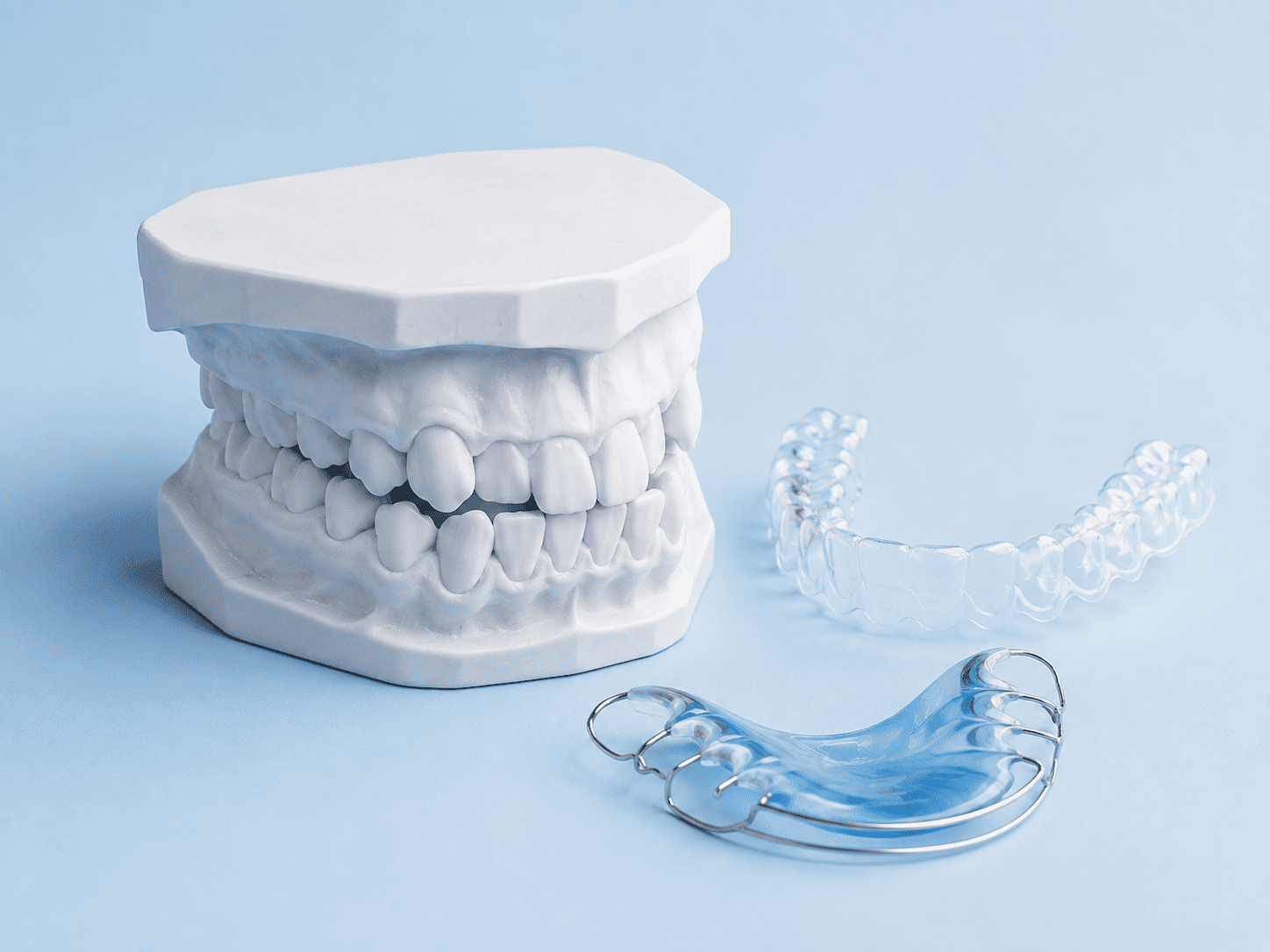
What are dental retainers made of? Depending on the type: removable retainers are made from clear plastic (Essix/Vivera) or acrylic with metal wire (Hawley). Fixed retainers are made from thin stainless steel wire bonded to the back of the teeth.
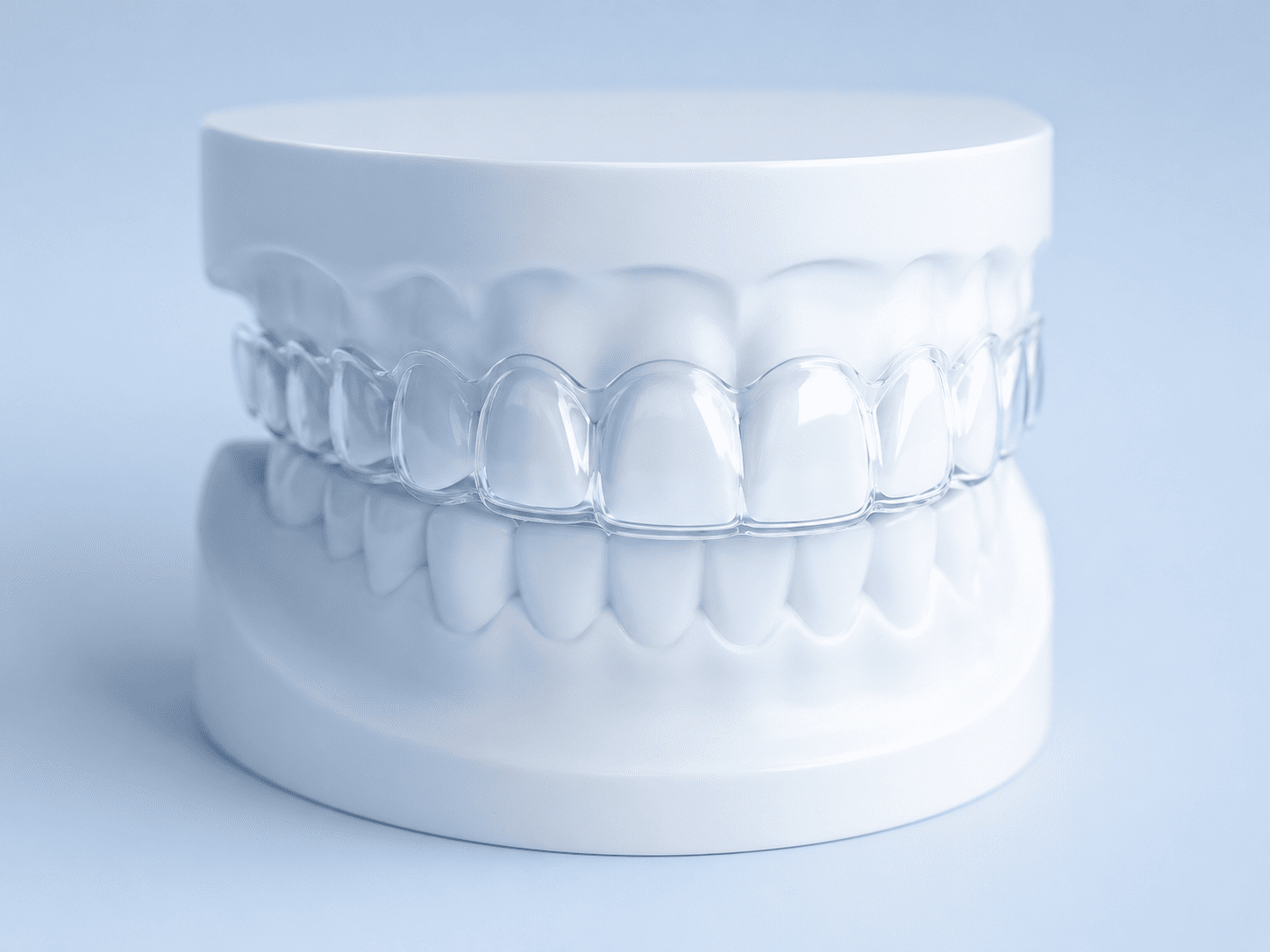
What are twisted wire dental retainers? This term refers specifically to multi-strand or braided stainless steel wire used in bonded retainers, which is more flexible than single-strand wire and maintains better contact across multiple teeth.
| Fixed (Bonded) Retainer | Removable Retainer (Essix/Hawley) | |
|---|---|---|
| Compliance | Zero — works 24/7 | Must be worn as instructed |
| Visibility | Hidden — on back of teeth | Essix: nearly invisible | Hawley: visible |
| Cleaning | Requires floss threader/interdental brush | Remove and clean separately |
| Durability | Long-lasting if monitored | 1–3+ years depending on type |
| Monitoring | Regular check-ups essential | Check-ups recommended |
| Best for | Lower front teeth; patients who may not wear removable | All areas; patients reliable with compliance |
Dr. Hasan typically recommends a combination: a fixed bonded retainer on the lower front teeth (where relapse is most common) plus a removable clear retainer for the upper arch — and often a removable for the lower as a backup. The specific recommendation depends on the case.
Dental retainer cost and dental retainer price in Dubai depend on the type of retainer and whether it is provided as part of an orthodontic treatment package or as a standalone replacement.
Orthodontic relapse — teeth moving back after braces — is one of the most common orthodontic concerns in adult patients. Teeth going back after braces, teeth shifting after braces, teeth moving after braces — these searches reflect a real and very common problem, and one that is entirely addressable.
Can teeth move back after braces? Yes. Without consistent retainer wear, teeth will gradually return toward their original positions — sometimes over months, sometimes over years. The speed and extent of relapse depends on the original problem, treatment method, and individual biology. Some relapse is almost imperceptible; in other cases, teeth shift significantly.
Teeth moved back after braces — what are the options? The answer depends on how much movement has occurred and how long ago treatment was completed.
Option 1: Updated Retainer (Minor Relapse)
If movement is minor and was detected early, a new retainer made from impressions of the current tooth position may be sufficient to hold the current position and prevent further shifting. This is not the same as correcting the relapse — it prevents it getting worse.
Option 2: Short-Course Retreatment (Moderate Relapse)
Where teeth have moved noticeably but not dramatically, a short course of orthodontic retreatment — braces or clear aligners for 6–18 months depending on the extent — can restore the original result. Second time braces or braces again after relapse is more common than patients realise, particularly in adults who stopped wearing their retainer in their 20s and return for treatment in their 30s or 40s.
Option 3: Full Retreatment (Significant Relapse)
Where significant movement has occurred — particularly where original bite problems have re-established — full retreatment may be needed. Retreatment orthodontics Dubai with a specialist orthodontist produces the same quality of result as first-time treatment and is treated the same way.
How to fix teeth that moved back: the starting point is an assessment with Dr. Hasan. He’ll examine the current tooth position against your original treatment records if available, assess the bite, and recommend the most appropriate and cost-effective route — which may be a new retainer, a short course of aligners, or full fixed brace retreatment.
Do retainers straighten teeth? A standard retainer holds teeth in their current position — it does not move teeth that have already shifted. If meaningful movement has occurred, retreatment is needed to correct it, followed by a new retainer to maintain the corrected position.
How long to wear retainer after braces — this is one of the most important questions, and the honest answer has changed significantly in orthodontic practice over the past two decades.
The old guidance was to wear retainers full-time for 6–12 months, then nights only, then gradually reduce. The current clinical understanding is different: teeth have a lifelong tendency to shift, and retainer wear should continue indefinitely — at minimum, every night — if you want to preserve your orthodontic result permanently.
Do I need to wear a retainer forever? The straightforward answer is: if you want your teeth to stay in the position orthodontic treatment achieved, yes — regular retainer wear (at minimum several nights per week) should continue long-term. The alternative is accepting a gradual degree of relapse over time.
How long do retainers last? Clear Essix retainers typically last 1–3 years with good care. Hawley retainers can last longer. Fixed retainers can last many years. All retainers eventually need replacement — either through wear, breakage, or changes in the teeth.
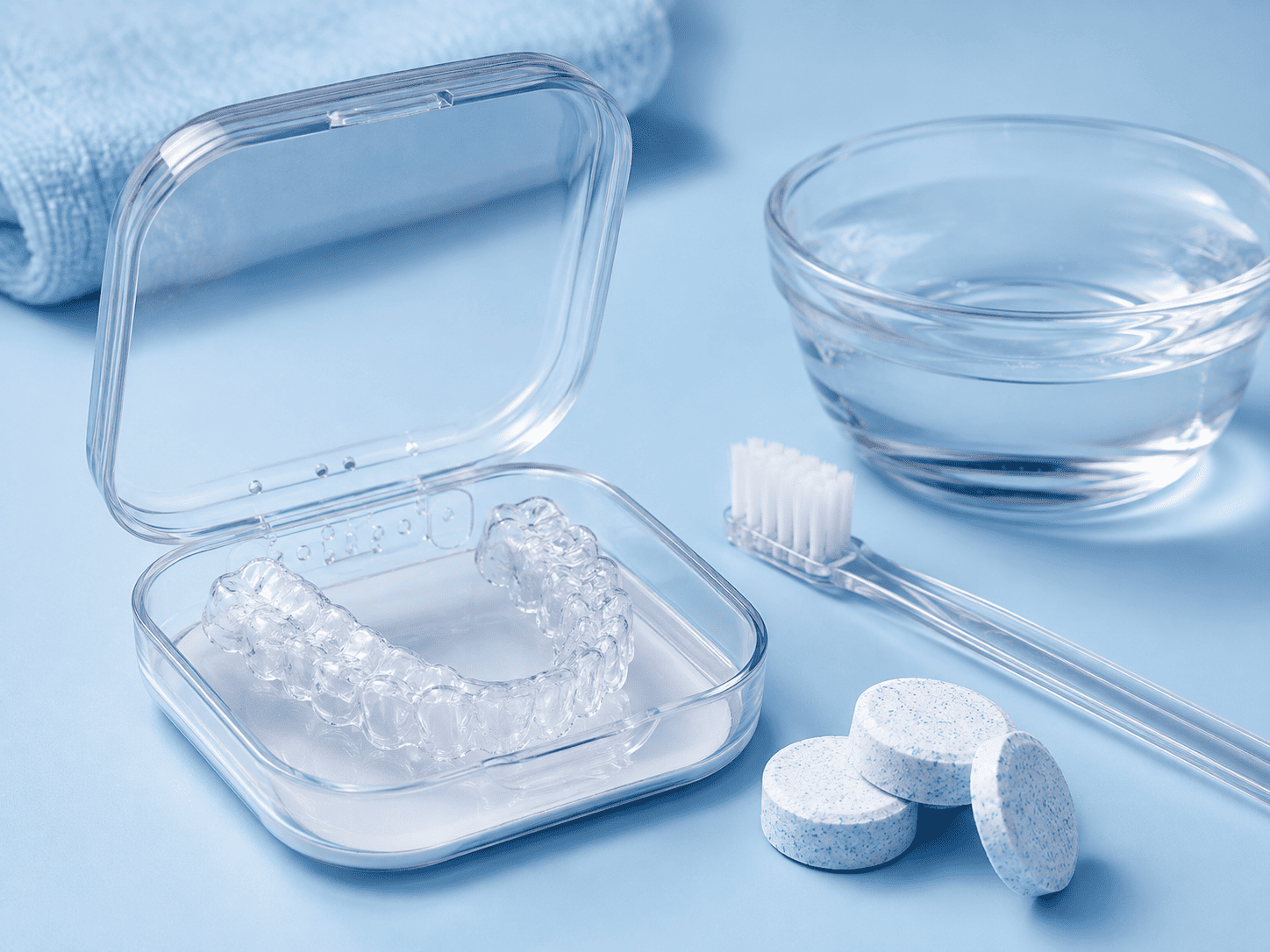
How to clean retainers: rinse in lukewarm (not hot) water each time you remove them. Brush gently with a soft toothbrush and mild clear soap or retainer cleaning tablets. Avoid toothpaste — the abrasive particles scratch the plastic surface. Never soak in mouthwash — coloured mouthwash stains clear retainers. Soak periodically in retainer cleaning solution or diluted white vinegar to remove build-up.
Can I eat with retainers? No — removable retainers should always be removed for eating and drinking anything other than still water. Eating with retainers risks cracking or distorting the plastic, trapping food beneath them, and exposing them to staining. Always store them in their case when not being worn — never wrap in tissue (they get thrown away).
A retainer that feels tight after a gap in wearing is a warning sign — it means the teeth have moved slightly. Do not force a tight retainer. Contact Dr. Hasan's practice for an assessment. If the retainer still fits (even if snugly), extended wearing may resolve it. If it no longer seats correctly, a new retainer or brief retreatment may be needed.
Broken retainer Dubai or lost retainer Dubai: contact the practice as soon as possible for a replacement. The longer teeth go without retainer support, the more likely they are to shift. Replacement retainer Dubai: a new retainer can be made from updated impressions or scans of your current teeth. If significant movement has occurred since your last retainer, Dr. Hasan will assess whether retreatment is needed before a new retainer can be made.
A dental retainer is an orthodontic appliance — fixed or removable — worn after braces or aligner treatment to hold teeth in their corrected positions while the surrounding bone and ligament stabilise. Without a retainer, teeth will gradually shift back toward their original positions.
Dental retainer types: (1) Essix/clear retainers — removable, nearly invisible clear plastic trays; (2) Hawley retainers — removable acrylic plate with metal wire; (3) fixed/bonded retainers — a thin wire bonded permanently to the back of the teeth. Most patients receive a combination of fixed (lower) and removable (upper) retainers.
An Essix retainer is a clear, removable plastic tray — similar in appearance to an Invisalign aligner — that fits snugly over the teeth to hold them in position. It is the most commonly provided retainer type after orthodontic treatment today. Essix retainers are nearly invisible when worn and typically last 1–3 years.
A fixed dental retainer (also called a bonded or permanent retainer) is a thin stainless steel wire bonded to the back surface of the front teeth. It cannot be removed by the patient and works 24/7 without compliance. It requires flossing with a threader and regular professional monitoring.
How long to wear retainer after braces: full-time for the first 6 months, then nights only from 6–12 months, then long-term nightly or every-other-night wear. The current clinical guidance is that retainer wear should continue indefinitely to permanently preserve the orthodontic result. Teeth have a lifelong tendency to shift.
If you want to permanently maintain your orthodontic result, yes — at minimum several nights per week long-term. Teeth do not permanently 'set' in their new position without continued retainer support. Patients who stop wearing retainers in their 20s often notice gradual shifting by their 30s.
Yes — orthodontic relapse is very common when retainer wear is inconsistent or stops entirely. Teeth shifting after braces can begin within weeks of stopping retainer use. The extent of movement depends on the original problem, individual biology, and how long retainer wear has been absent.
Options depend on the extent of movement: minor relapse — a new retainer may be sufficient to hold the current position. Moderate relapse — a short course of clear aligners or braces (6–18 months) can restore the result. Significant relapse — full retreatment. Book an assessment with Dr. Hasan to determine which is appropriate for your specific situation.
No. Retainers hold teeth in their current position — they do not move teeth that have already shifted back. If meaningful relapse has occurred, retreatment (braces or aligners) is needed to correct it, followed by a new retainer to hold the corrected position.
Contact Dr. Hasan's practice as soon as possible. The longer your teeth go without retainer support, the more likely they are to shift. A replacement retainer can be made from new impressions or scans. If noticeable movement has already occurred, an assessment before replacement is advisable.
Rinse in lukewarm water each time you remove it. Brush gently with a soft toothbrush and mild clear soap or retainer tablets. Do not use toothpaste (scratches the plastic), do not soak in coloured mouthwash (stains clear retainers), and do not rinse with hot water (can distort the shape). Store in a retainer case when not worn.
No — remove removable retainers before eating and drinking anything other than still water. Eating with retainers risks cracking, distorting, or staining them, and traps food underneath.
Dental retainer cost in Dubai depends on the type and whether it is provided as part of an orthodontic treatment package or as a standalone replacement. Replacement clear retainers are the most affordable option. An accurate quote is given at consultation.
Retainers may seem straightforward — but the decision between fixed and removable, the monitoring of a bonded retainer, and the assessment of relapse and retreatment options all benefit from specialist orthodontic judgement. A general dentist can provide a replacement retainer; a specialist orthodontist can assess whether a new retainer is sufficient or whether retreatment is needed, and plan that retreatment to the same standard as the original treatment.
Whether you need a retainer after completing treatment, a replacement for a broken or lost retainer, or an assessment of teeth that have shifted after previous orthodontic treatment — Dr. Hasan can help.

The goal of our clinic is to provide friendly, expert orthodontic care for patients of all ages — from young children receiving their first orthodontic assessment to adults discovering that the right time for treatment is now.
Copyright © 2026 Rights Reserved. Website by TDMA
WhatsApp us