
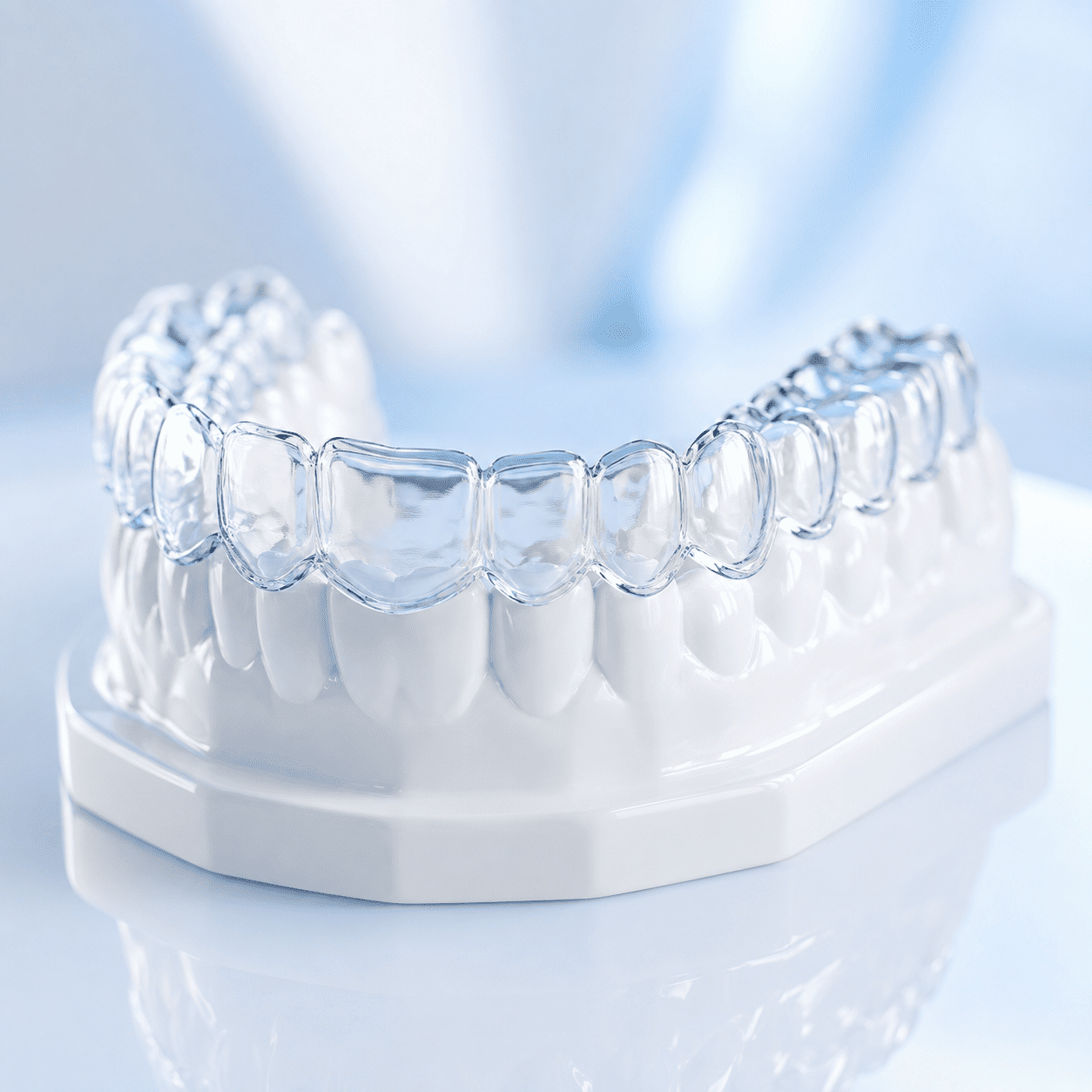

When patients search for ‘invisible braces,’ they might mean any of three genuinely different orthodontic options. Understanding the difference matters — because what works for one patient’s situation may not be the right choice for another.
Dr. Hasan Odeh, specialist orthodontist with 20 years of experience, offers all three invisible brace options in Dubai at Gemini Medical Center, Al Safa. This page explains each clearly so you can arrive at your consultation already informed.
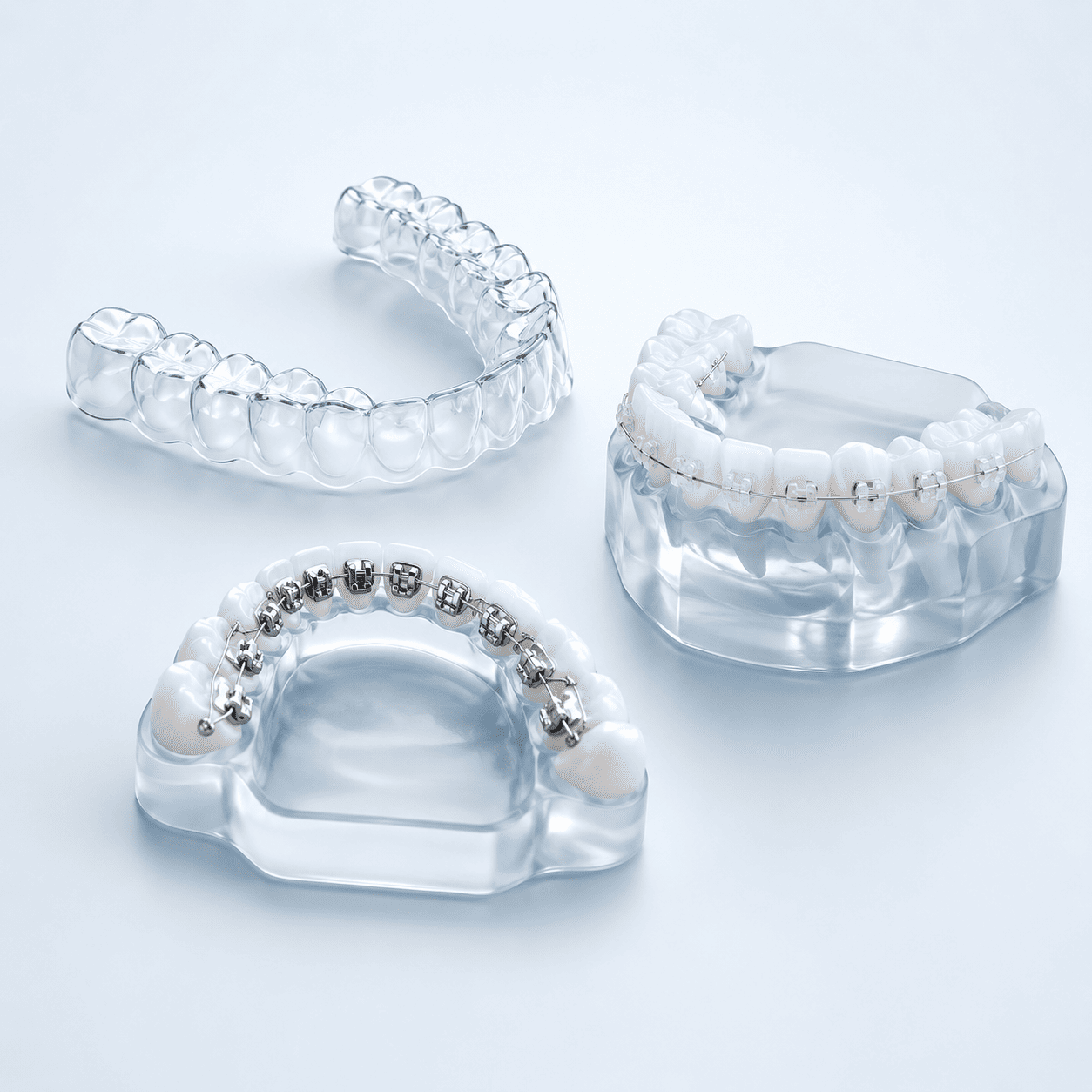
‘Invisible braces’ is not a specific treatment — it’s a category term that patients use to describe any orthodontic appliance that is less visible than traditional metal braces. In practice, there are three meaningfully different treatments that fit this description:
Each has different clinical indications, costs, lifestyle implications, and levels of visibility. What are invisible braces made of? It depends on the type — clear plastic for aligners, ceramic or composite for ceramic braces, metal for lingual braces. What do invisible braces look like? From the front: aligners and lingual braces are effectively invisible; ceramic braces are tooth-coloured but visible up close.
The right invisible brace option depends on three factors: the complexity of your orthodontic case, your lifestyle and compliance habits, and your budget. Here’s a simple guide:
Do invisible braces work as well as metal braces? All three options produce excellent results when correctly indicated and planned by a specialist orthodontist. Invisible braces effectiveness — ceramic and lingual braces are mechanically equivalent to metal braces. Clear aligners are equally effective for the cases they are suited to. The key is matching the treatment to the case.
| Clear Aligners | Ceramic Braces | Lingual Braces | |
|---|---|---|---|
| Visibility | Nearly invisible | Tooth-coloured — less visible | Completely hidden (inside teeth) |
| Fixed or Removable | Removable | Fixed | Fixed |
| Compliance Needed | High — 20–22 hrs/day | None — works 24/7 | None — works 24/7 |
| Diet Restrictions | None (remove to eat) | Avoid hard/sticky foods | Avoid hard/sticky foods |
| Case Complexity | Mild to moderate | Full range | Full range |
| Speech Impact | None | None | Temporary lisp (2–4 wks) |
| Cleaning | Remove to brush normally | More care around brackets | More care — inner position |
| Cost in Dubai | Moderate-high | Moderate | Highest |
| Best for | Aesthetics + flexibility | Effective fixed + less visible | Maximum discretion + complex cases |
Invisible aligners vs braces: this comparison is really about which type of invisible treatment — fixed (ceramic or lingual) or removable (aligners). Fixed invisible options (ceramic and lingual braces) require no daily compliance effort. Removable options (clear aligners) offer more flexibility but depend on consistent wearing.
Clear Aligners (Invisalign & Others)
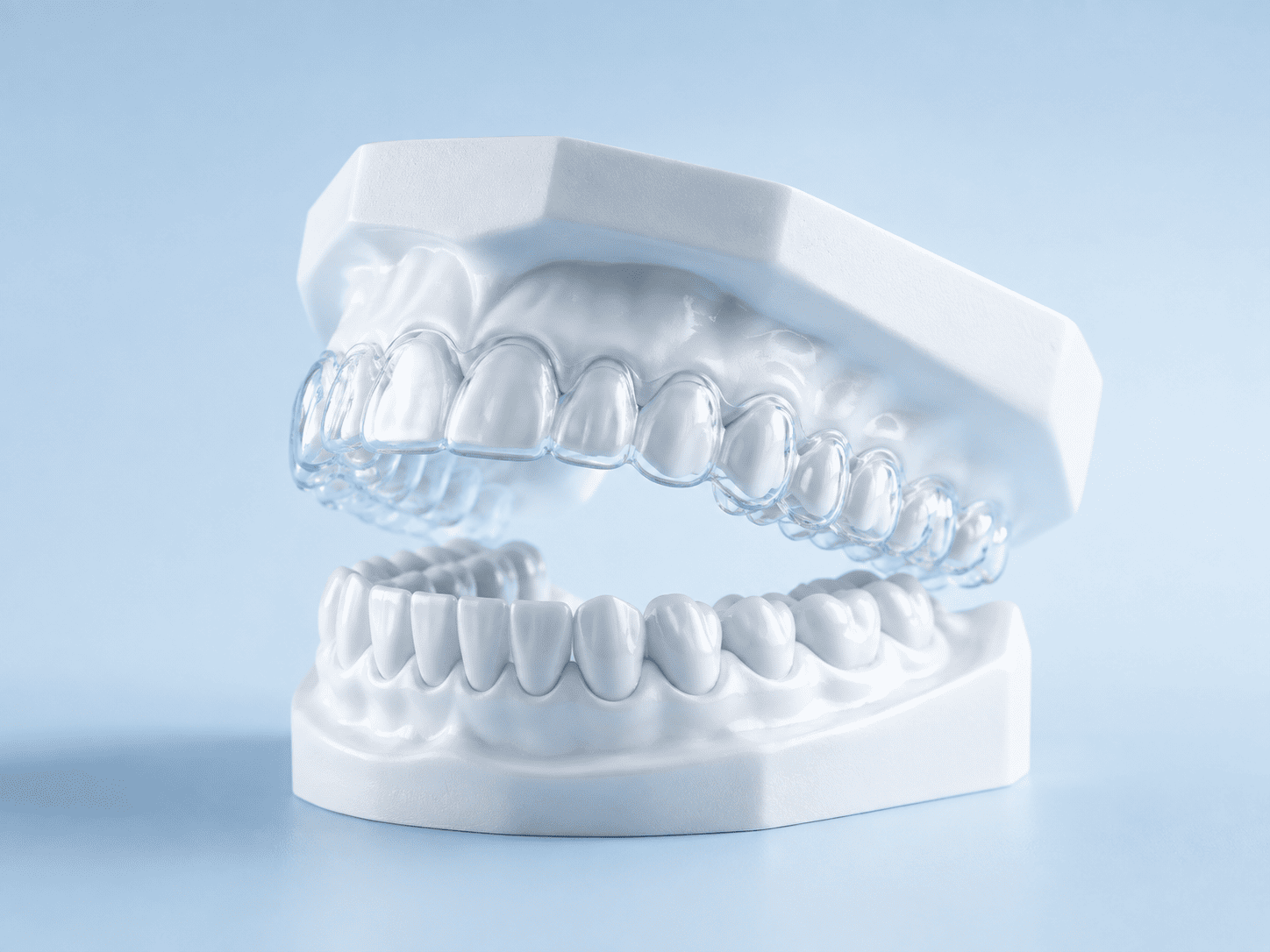
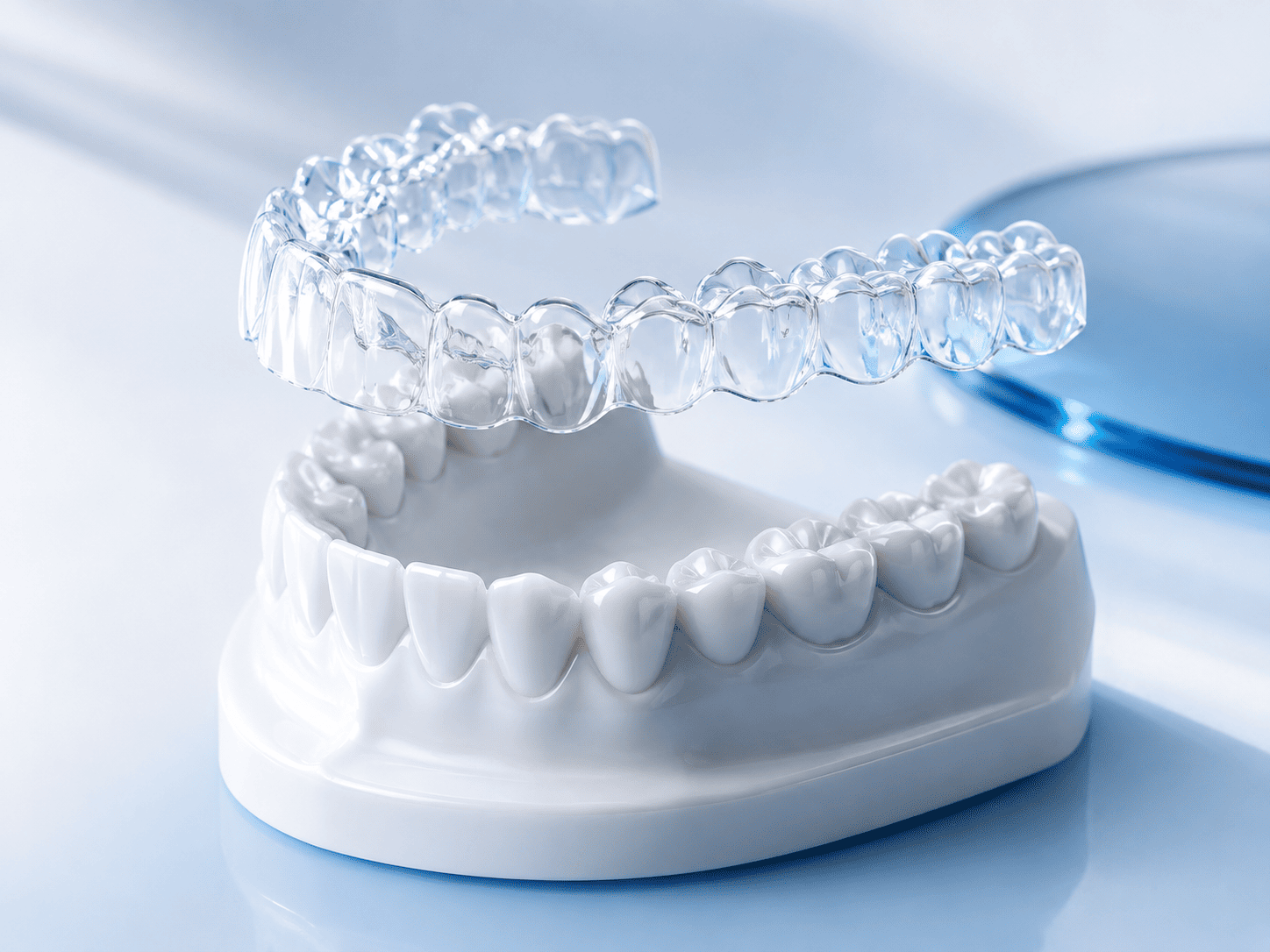
The most truly invisible option — clear plastic trays that fit over the teeth and are nearly undetectable when worn. Clear aligners are removable, which means no food restrictions and easy cleaning. They are best suited to mild to moderate crowding, spacing, and bite issues in patients who will wear them consistently 20–22 hours per day.
→ See our dedicated Invisalign & Clear Aligners page for full detail on this option.
Ceramic Braces
Tooth-coloured or clear ceramic brackets bonded to the front of the teeth — fixed, like metal braces, but far less visible. Ceramic braces can handle the full range of orthodontic problems that metal braces can, including complex bite corrections and significant crowding. They are not removable, and the elastic ties holding the wire can stain between appointments — but ties are replaced at every 6–8 week adjustment.
→ See our dedicated Ceramic Braces page for full detail on this option.
Lingual Braces (Hidden Braces)
Lingual braces are fixed metal brackets placed on the inside surface (tongue-side) of the teeth — completely invisible from the front, even at close range. Because they are on the inside, the same person who would notice ceramic braces across a table will never see lingual braces at all.
Invisible lingual braces can handle complex orthodontic cases — including those that clear aligners cannot reliably treat — while being the most discreet fixed brace option available. The trade-off is cost (typically the most expensive option), and an adaptation period for speech and tongue comfort in the first few weeks.
Invisible braces cost in Dubai varies significantly depending on which type you choose and the complexity of your case:
Typically the most affordable of the three invisible options
Typically moderate to higher cost depending on case length and brand
Typically the most expensive invisible brace option, reflecting the specialist fitting technique required
Invisible teeth braces cost also varies by treatment length — a 12-month case costs less than a 24-month case regardless of appliance type. How much invisible braces cost accurately can only be determined after a clinical assessment and treatment plan. Affordable invisible braces: ceramic braces represent the most cost-effective invisible fixed brace option for most patients.
Invisible braces cost in Abu Dhabi: consistent pricing at Dr. Hasan’s Palmira Specialized Medical Center in Abu Dhabi.
'Invisible braces' is not one treatment — it's a category describing any orthodontic appliance that is less visible than traditional metal braces. The three main options are: (1) clear aligners (Invisalign and others) — removable clear plastic trays; (2) ceramic braces — fixed, tooth-coloured brackets on the front of the teeth; (3) lingual braces — fixed metal brackets on the inside (tongue-side) of the teeth, completely hidden from view.
Yes — all three types of invisible braces are clinically effective when matched to the right case. Ceramic and lingual braces are mechanically equivalent to metal braces. Clear aligners are equally effective for mild to moderate cases. The important question is which type is right for your specific orthodontic situation.
Yes, when the right option is chosen for the case complexity. Is invisible braces effective for complex bite problems? Lingual and ceramic braces can handle the full range of orthodontic problems, including complex ones. Clear aligners are most effective for mild to moderate cases.
Invisible braces cost in Dubai varies by type. Ceramic braces are typically the most affordable of the three options, followed by clear aligners, with lingual braces generally the most expensive. Invisible teeth braces cost also varies by case complexity and treatment length. An accurate quote requires a consultation with Dr. Hasan.
Types of invisible braces: (1) Clear aligners — removable, nearly invisible trays (Invisalign and others). (2) Ceramic braces — fixed, tooth-coloured brackets. (3) Lingual braces — fixed metal brackets on the inside of the teeth. Each has different indications, costs, and lifestyle implications.
Invisible braces for adults and invisible dental braces for adults: the best option depends on the case. Adults with mild crowding who value aesthetics often choose clear aligners. Adults with more complex cases who want a fixed treatment often choose ceramic braces. Adults for whom complete invisibility is the priority choose lingual braces. Dr. Hasan offers all three and will advise which suits your case.
Yes. Invisible braces behind teeth refers to lingual braces — orthodontic brackets bonded to the inner (tongue-side) surface of the teeth, making them completely invisible from the front. Invisible lingual braces are the only fixed orthodontic option that is truly undetectable when you smile.
Invisalign is a brand of clear aligner — one type of invisible brace. Invisalign vs invisible braces: Invisalign is removable; ceramic and lingual braces are fixed. Invisalign is most effective for mild-moderate cases; fixed invisible braces handle the full range of orthodontic problems.
Yes — lingual braces and ceramic braces can treat severe crowding and complex bite issues, just as effectively as metal braces. Clear aligners may have limitations for very complex cases. The right choice depends on your specific bite, which Dr. Hasan will assess at consultation.
Invisible line braces typically refers to lingual braces — brackets placed on the inside line of the teeth. Some patients also use this term for clear aligner 'lines' (trays). Invisible line braces cost in Dubai varies — lingual braces are typically the most expensive invisible brace option.
Most orthodontic practices in Dubai specialise in one or two invisible brace options and guide patients toward whichever they offer. Dr. Hasan’s practice offers all three — clear aligners, ceramic braces, and lingual braces — and recommends based entirely on what suits your case and your life.
Not sure which invisible brace option is right for you? A consultation with Dr. Hasan will assess your teeth, bite, and goals — and give you a clear recommendation based on your case, along with an honest comparison of all three options and their costs.

The goal of our clinic is to provide friendly, expert orthodontic care for patients of all ages — from young children receiving their first orthodontic assessment to adults discovering that the right time for treatment is now.
Copyright © 2026 Rights Reserved. Website by TDMA
WhatsApp us